

The term implantology dentistry describes the area of dental care concerned with replacing missing teeth using dental implants. An implant is placed in the jawbone to support a replacement tooth or teeth. Treatment usually involves an assessment, careful planning, surgery, a healing period and fitting the replacement. It is not simply a matter of inserting a new tooth in one appointment.
Implants may be suitable for some people, but they are not the only option. Understanding the stages, alternatives and ongoing care can help you have an informed discussion with your dentist.
How a dental implant replaces a tooth
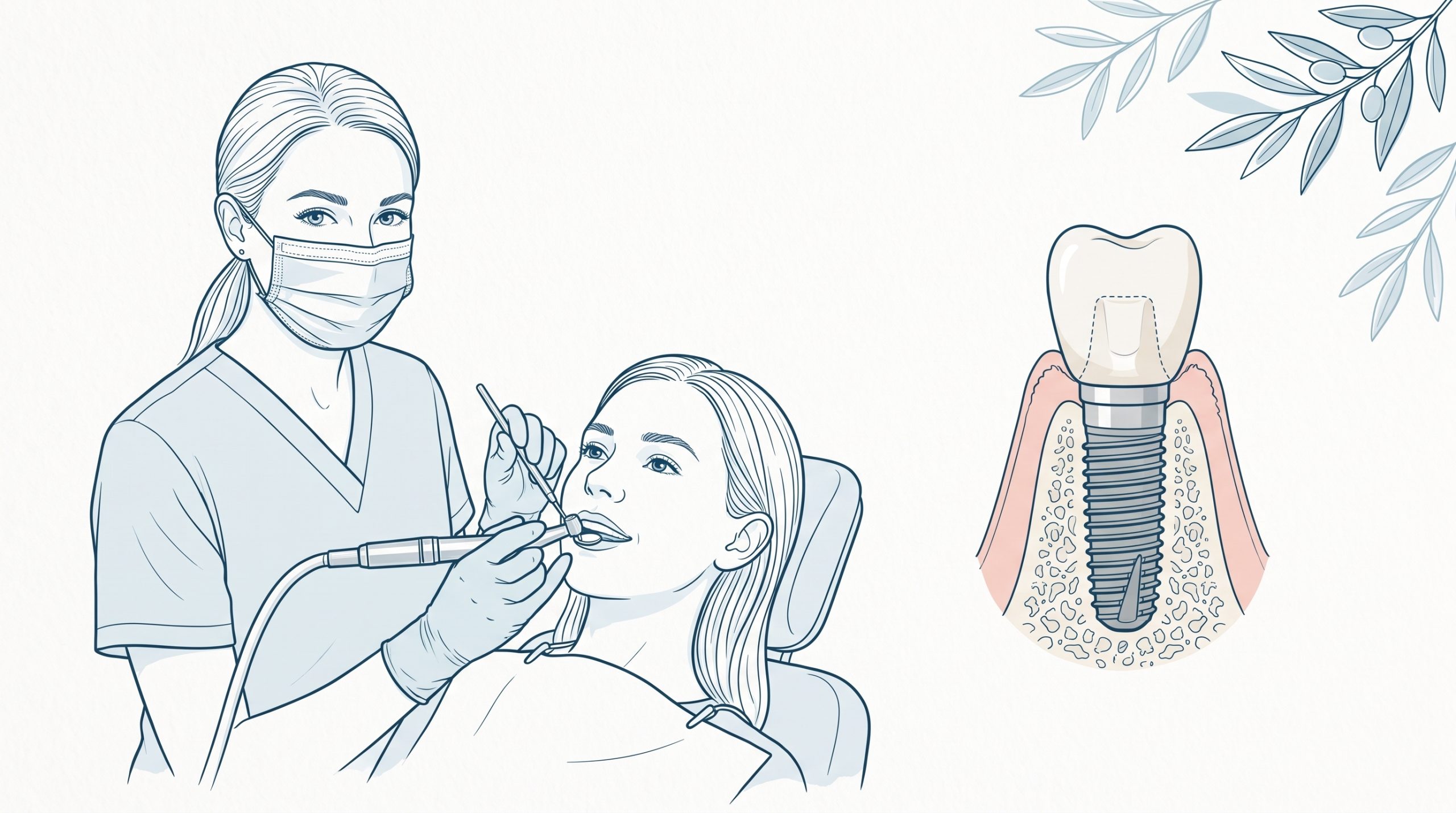
A dental implant restoration commonly has three parts:
- The implant: A small fixture, usually made from titanium, placed in the jawbone to act as an artificial tooth root.
- The abutment: A connector between the implant and the replacement tooth.
- The restoration: The visible replacement, such as a crown for one missing tooth, a bridge or an implant-supported denture.
The implant and the crown are different components. A crown can also be fitted over a natural tooth, so having a crown does not necessarily mean having an implant.
During healing, bone can grow into close contact with the implant surface. This process is called osseointegration, and it helps provide support for the replacement tooth. Successful integration is not guaranteed, which is one reason treatment requires monitoring.
What does implantology dentistry involve?
The process is tailored to your oral health, medical history and the number and position of missing teeth. Some people need preparatory treatment before an implant can be considered. Others may find that a bridge, denture or monitoring the gap is more appropriate.
Healthdirect’s information about dental implants provides an Australian overview of the procedure and its potential risks.
1. Examining your mouth and planning treatment
Your dentist examines your gums, remaining teeth, bite and the space where the tooth is missing. They also discuss what you would like treatment to achieve, including any difficulties with chewing or wearing an existing denture.
X-rays help assess the available bone and nearby structures. A three-dimensional scan may be recommended where clinically indicated, rather than being necessary for every patient.
Your medical history matters too. Tell your dentist about health conditions, medicines, smoking or vaping, previous surgery and any concerns about dental treatment.
An assessment for implantology dentistry should explain whether an implant is a reasonable option, what additional treatment may be needed and which alternatives are available. A referral may be appropriate if your care requires additional expertise.
2. Preparing the gums and bone
Active gum disease or tooth decay may need treatment before implant surgery. A tooth that can be maintained should not automatically be removed simply to make room for an implant.
If there is not enough bone in the proposed position, a bone graft may be considered. This involves adding material to help build or support the area. Some upper back-tooth sites may require a procedure near the sinus to create sufficient space for an implant.
These procedures are not needed for everyone. They can add healing time, cost and further risks, so your dentist should explain why they are being recommended and whether another tooth-replacement option could avoid them.
3. Placing the implant
Implant placement is a surgical procedure. Local anaesthetic is commonly used to numb the treatment area. If additional anxiety management or sedation is being considered, the treating clinician should explain its suitability, availability and risks separately.
The clinician prepares a site in the bone and places the implant in the planned position. Depending on the treatment approach, the gum may be closed over it or a small healing component may remain visible above the gum.
The surgical stage of implantology dentistry is only part of the treatment, with healing and restoration still to follow. Some implants can be placed at the time of tooth removal, but this depends on the site and clinical assessment. Immediate placement does not automatically mean an immediate final tooth.
4. Allowing time for healing
The gum and bone heal on different timelines. Initial soreness and swelling may settle well before the implant is ready to support the final replacement tooth.
Your treating clinician will explain eating, cleaning and activity restrictions, along with any prescribed medicines. Follow these individual instructions rather than general advice intended for another patient.
A temporary replacement may be possible during healing, although it is not suitable in every situation. Ask whether you will have a visible gap and whether a temporary tooth would have any chewing restrictions.
Follow-up appointments allow the clinician to check healing and assess whether the implant is ready for the next stage. Treatment can take several months, particularly when grafting or other preparation is needed.
5. Fitting the replacement tooth
Once the implant is considered ready, impressions or a digital scan may be taken to make the restoration. The dentist checks its shape, fit and contact with the opposing teeth before securing it.
The replacement also needs to allow effective cleaning around the gum. A tooth that looks appropriate but is difficult to maintain may create problems later.
The final stage of implantology dentistry includes checking your bite and explaining how to care for the implant and its restoration. Review appointments may be needed to assess comfort, gum health and function. Report persistent discomfort, an uneven bite or any movement rather than assuming these are normal features of a new tooth.
Who may be suitable for dental implants?
Suitability involves more than having a gap. The dentist considers the available bone, gum health, remaining teeth and whether you can maintain the area over time.
Factors that can affect planning include:
- Gum disease: Existing disease needs assessment and management, and a history of periodontitis may increase the risk of implant complications.
- Smoking: Smoking can impair healing and increase the risk of complications.
- Medical conditions and medicines: Diabetes, medicines affecting bone turnover and previous radiotherapy to the head or neck can require additional assessment.
- Growth and bite forces: Implants are generally considered once jaw growth is complete, while teeth grinding or clenching may influence restoration design and ongoing care.
None of these details should be assessed in isolation. For example, diabetes does not automatically rule out treatment, but its management matters.
Suitability for implantology dentistry also depends on your preferences, finances and ability to attend follow-up appointments. Do not stop prescribed medicines yourself; your dentist can discuss any necessary coordination with your medical practitioner.
Benefits, limitations and potential risks
An implant-supported replacement may help with chewing and replace a visible missing tooth. For a single-tooth restoration, it may avoid the need to prepare neighbouring teeth for a conventional bridge. The value of these benefits depends on your starting situation and the available alternatives.
Implants require surgery and ongoing maintenance. Potential complications include infection, bleeding, delayed healing and failure of the implant to integrate with the bone. Depending on the implant position, there can also be risks involving nearby teeth, nerves or the sinus.
Problems can develop after healing too. Inflammation around an implant may affect the surrounding gum and, in a condition called peri-implantitis, the supporting bone. Crowns or other components can chip, loosen or wear and may need repair or replacement.
All dental procedures carry potential risks and benefits. Before giving consent, ask which risks apply to your proposed treatment, how they would be managed and what would happen if the implant could not be used. Outcomes and recovery experiences vary between patients.
Looking after an implant over time
An implant cannot develop tooth decay, but the tissues around it can become inflamed or infected. Natural teeth elsewhere in your mouth still need protection from decay and gum disease.
Your dentist can show you how to brush and clean between the implant restoration and adjacent teeth. Some restorations require specific interdental brushes or other cleaning aids. The appropriate method depends on their shape and your ability to reach the area.
Long-term care is part of implantology dentistry, not an optional extra after the tooth is fitted. Regular reviews allow your dentist to assess gum health, cleaning access and the condition of the restoration. Review intervals should reflect your individual needs.
Bright Smiles’ guidance on dental implant aftercare covers related maintenance considerations. Implants should not be described as permanent: their lifespan varies, and individual components may need attention at different times.
What alternatives can replace missing teeth?
The appropriate choice depends on the gap, neighbouring teeth, gum health and your preferences. A dentist should explain the reasonable alternatives before recommending surgery.
| Option | What it involves | A consideration to discuss |
|---|---|---|
| Dental implant | A fixture in the jawbone supporting a replacement tooth or teeth | Surgery, healing time and ongoing maintenance are required |
| Dental bridge | A fixed replacement supported by adjacent teeth or implants | A conventional bridge may require preparation of neighbouring teeth |
| Removable denture | A removable appliance replacing some or all missing teeth | Comfort, stability and cleaning requirements vary |
| Monitoring without replacement | Leaving the gap and reviewing the mouth | Suitability depends on the gap’s position, function and oral health |
Not every missing tooth needs to be replaced. In some circumstances, monitoring may be reasonable after assessment.
If you are weighing up removable and implant-supported options, Bright Smiles’ article comparing dentures and dental implants explores that decision in more detail.
Treatment timing, costs and questions to ask
There is no single timeline or fee that accurately represents every implant case. Planning implantology dentistry may involve separate costs for imaging, tooth removal, grafting, surgery, temporary teeth and the final restoration.
Ask for a written treatment plan that identifies what is included, what could change and the expected appointment sequence. You can also ask how maintenance and possible future repairs are charged. Private health insurance benefits depend on your policy and the relevant item numbers, so confirm these with your insurer.
Practical questions include whether you will need time away from work, how eating may be affected and whom to contact if a problem develops during healing. You should also understand whether any part of your care will involve a referral.
For longer-term expectations, Bright Smiles’ discussion of how long dental implants may last provides further context. There is no need to decide before your questions have been answered.
Frequently asked questions
Does getting a dental implant hurt? Local anaesthetic is used to numb the area during surgery, but pressure or movement may still be felt. Soreness, swelling or bruising can occur afterwards. Your clinician should explain pain management and when to seek advice.
Can I have a replacement tooth fitted on the same day? Some carefully selected cases allow an immediate temporary restoration. This is not suitable for everyone and may involve chewing restrictions. A same-day temporary tooth is not necessarily the final restoration.
Is implantology dentistry a specialist qualification? The term describes an area of dental practice, rather than a recognised Australian dental specialist title. Ask who would provide each stage of treatment and whether referral is recommended for your circumstances.
When should I contact the treating dentist after surgery? Contact them about worsening pain or swelling, persistent bleeding, discharge, fever or a loose component. Difficulty breathing or swallowing requires urgent medical attention; call 000 in an emergency.
Discussing your missing-tooth options
A dental examination can help clarify whether an implant, bridge, denture or monitoring is appropriate for your circumstances.
Bright Smiles sees patients at both its Brightwater and Currimundi locations on the Sunshine Coast. To discuss your concerns, you can book an appointment with the team at either location and ask about assessment, alternatives and any referral that may be needed.