

At a check-up, dental hygiene treatment may include assessing your gums, removing plaque and hardened deposits, discussing cleaning techniques and considering preventive care such as fluoride. It is not a fixed package that everyone needs at every visit. Your dentist should explain which parts are appropriate for your teeth and gums, what they involve and whether any further care is recommended.
For patients on the Sunshine Coast, understanding these decisions can make an appointment feel more familiar and help you ask useful questions.
Assessment comes before cleaning
A check-up and a professional clean have different purposes, although they often happen during the same appointment. The examination assesses your oral health. Cleaning addresses deposits on your teeth that need professional removal.
Before recommending care, your dentist may ask about bleeding gums, sensitivity, dry mouth, your cleaning routine and any changes since your last visit. Medical conditions and medicines can also affect treatment planning. Mention pregnancy, diabetes and medicines such as blood thinners, but do not stop prescribed medication without advice from your treating clinician.
Your dentist may check for plaque, hardened deposits, gum inflammation and areas that are difficult to clean. Where appropriate, they may measure the spaces between your teeth and gums using a small probe. These measurements help assess gum health rather than simply how clean your teeth look.
The wider examination can involve other assessments, as outlined in our guide to what general dental treatment may include.
What dental hygiene treatment may include during the visit
The care recommended depends on what the assessment finds. Someone with healthy gums and little deposit build-up may need a different approach from someone with inflamed gums, heavy deposits or established gum disease.
Your dentist should explain the proposed care and obtain your consent before proceeding. You can ask why a particular step is recommended, what alternatives exist and whether it can be discussed further before you decide.
Scaling to remove hardened deposits
Plaque is a sticky film of bacteria that forms on teeth. When it hardens, it becomes calculus, also called tartar. Brushing and cleaning between teeth help manage plaque, but established calculus generally needs professional removal.
Scaling involves removing these deposits with instruments. An ultrasonic scaler uses a vibrating tip with water, while hand instruments allow targeted cleaning. The choice depends on the area being treated and your individual needs.
Cleaning may concentrate around the gumline or other areas where deposits have collected. More extensive cleaning below the gums requires a separate assessment and may involve a different treatment plan.
Polishing when there is a reason to do it
Polishing may be used to remove some surface staining or remaining plaque. It is not necessarily required on every tooth at every appointment, and it does not change the natural colour of your teeth in the way whitening treatment can.
Dental hygiene treatment should be guided by clinical findings, rather than an expectation that every visit includes scaling, polishing and additional preventive products.
Our explanation of what dental cleaning can and cannot do covers the distinction between removing deposits, managing surface stains and treating other dental concerns.
Fluoride, X-rays and advice are separate decisions
Some appointments include additional preventive care or investigations. These are not automatically needed because you are having a clean.
Fluoride helps strengthen tooth enamel and reduce the risk of decay. Your dentist may consider a professional fluoride application based on factors such as previous decay, exposed root surfaces or dry mouth. They should explain the reason for recommending it and any relevant aftercare.
Dental X-rays are diagnostic images, not a cleaning procedure. They may be recommended when the dentist needs information that cannot be obtained from looking in your mouth alone. Previous images, current findings and your individual risk help guide that decision.
| Possible part of the appointment | Why it may be considered | What to clarify |
|---|---|---|
| Professional fluoride application | To support decay prevention when clinically appropriate | Why it is recommended and any eating or drinking instructions |
| Dental X-rays | To assess areas or conditions not fully visible during examination | What information the images are expected to provide |
| Cleaning advice or demonstration | To improve access to areas where plaque is collecting | Which technique or cleaning aid suits your mouth |
A useful dental hygiene treatment discussion connects each recommendation to something found during your assessment, rather than presenting every option as essential.
When gum care needs more than a routine clean
Bleeding gums can be a sign of inflammation, but the cause needs assessment. Gingivitis means inflammation of the gums. Periodontitis is a more serious form of gum disease involving damage to the tissues supporting the teeth.
As Healthdirect explains in its guidance on gum disease, treatment depends on the type and extent of the condition. A routine clean may form part of care, but it is not enough for every gum problem.
If your dentist finds signs of periodontitis, they may recommend more detailed gum measurements, relevant X-rays and cleaning beneath the gumline. This can require separate appointments and sometimes local anaesthetic to numb the area. Referral to a periodontist, a registered specialist in gum care, may be appropriate in some circumstances.
Gum care also depends on ongoing cleaning at home and review appointments. Professional treatment does not replace daily plaque control, and the response varies between patients.
What you might feel and how to discuss comfort
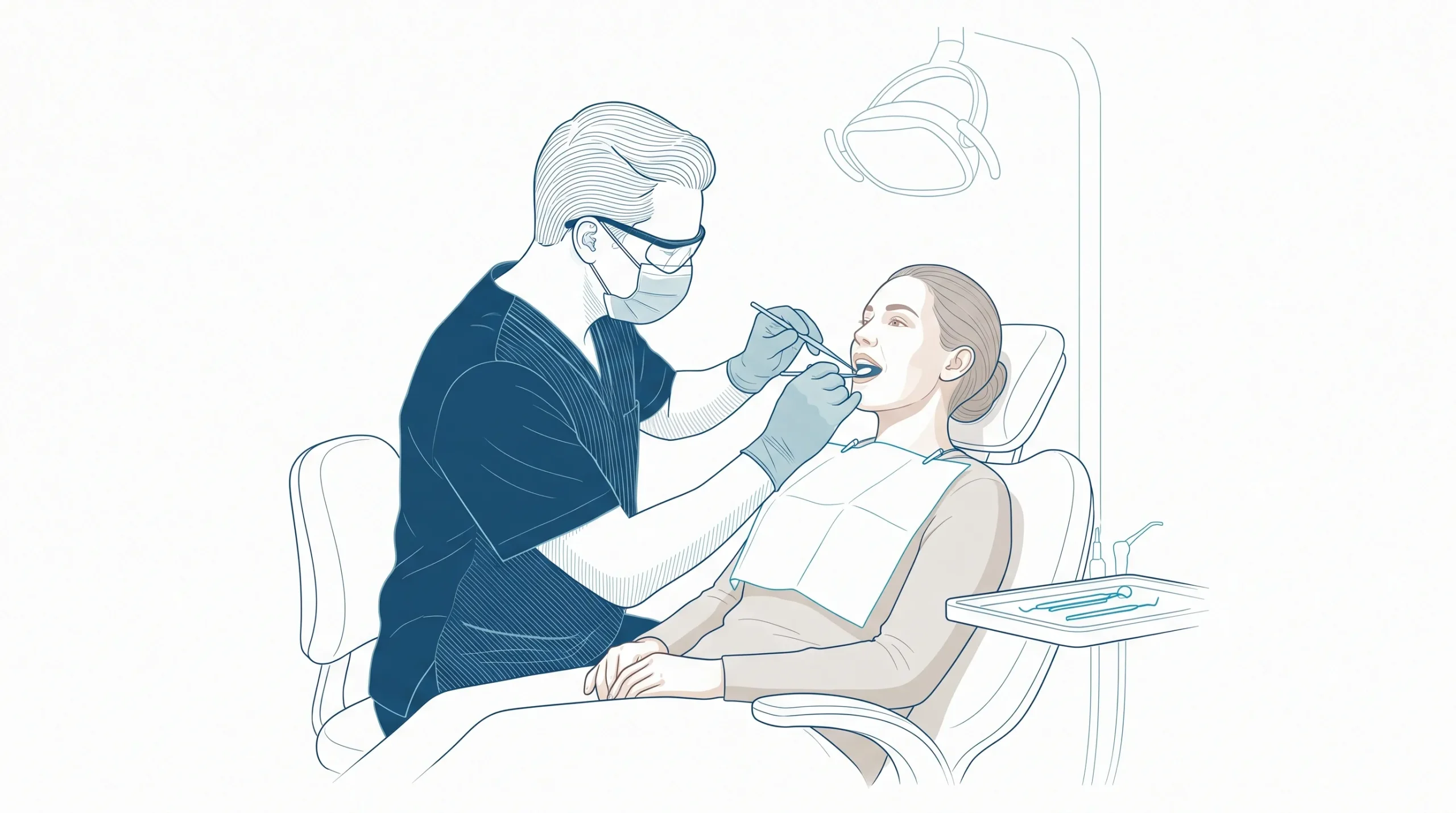
During scaling, you may notice vibration, water spray, pressure and the sound of suction. Some areas can be more sensitive than others, particularly where gums are inflamed or tooth roots are exposed. Experiences differ, so it is reasonable to discuss comfort before treatment starts.
If you feel anxious, have sensitive teeth or have found previous appointments difficult, tell the team. You can ask about an agreed stop signal, short pauses and how each part of the appointment will be explained. Depending on the planned care, your dentist can discuss whether numbing or another approach is appropriate.
Possible effects of cleaning include temporary sensitivity, gum tenderness and bleeding, especially when gums are inflamed. The expected effects depend on the condition of your mouth and the extent of treatment.
During dental hygiene treatment, let the practitioner know if you are uncomfortable rather than feeling you need to tolerate it silently. If bleeding is heavy or persistent, or discomfort is worsening afterwards, contact the practice for advice.
Leave with a practical plan for home
The most useful advice is specific to your mouth. For example, your dentist may demonstrate how to reach the back of a crowded tooth, clean around a fixed retainer or choose an interdental brush that fits comfortably between particular teeth.
Most adults are advised to brush twice daily with fluoride toothpaste and clean between their teeth daily. The method may need adapting around braces, bridges, implants or areas where dexterity makes cleaning difficult.
If fluoride or another product is applied during the appointment, follow the instructions given for that product. There is no single eating or drinking rule that applies to every hygiene visit.
Before leaving, make sure you understand what to do at home and which symptoms should prompt contact with the dentist. Our guide to creating an oral hygiene care plan at home can help you organise that advice into a manageable routine.
How often is care needed, and what will it cost?
There is no single interval that suits everyone. Your dentist can recommend a review schedule based on your gum health, decay risk, medical history and response to previous care. People receiving treatment for gum disease may need closer monitoring than those with stable oral health.
The cost of dental hygiene treatment depends on what is recommended, including whether the visit involves an examination, cleaning, imaging or further gum care. Ask for an explanation of the proposed items and fees before proceeding.
If you have private health insurance, check your own policy for dental benefits, limits and waiting periods. A description such as “check-up and clean” does not necessarily tell you which items are included or what your insurer will pay.
Useful questions include: “What have you found?”, “Which parts of today’s care do you recommend?” and “Will any further treatment need a separate appointment?”
Frequently asked questions
Will every check-up include a scale and clean? Not necessarily. An examination helps determine whether cleaning is needed and how extensive it should be. Your dentist can explain the recommendation based on the deposits present, your gum health and other findings.
Can I have a clean if my gums bleed? Bleeding does not automatically rule out cleaning. It is a reason to assess the gums and discuss the cause. The appropriate care depends on whether there is inflammation, gum disease or another explanation.
Is dental hygiene treatment the same as a deep clean? Not always. The term can describe routine professional cleaning and preventive care. “Deep clean” commonly refers to more extensive cleaning below the gumline for diagnosed gum disease. Ask your dentist exactly what they mean and why it is recommended.
Can I discuss costs or postpone a decision? Yes. You can ask about fees, benefits, risks and alternatives before consenting. Your dentist can explain whether delaying a recommended procedure could affect your oral health, so you can make an informed choice.
Discuss what is appropriate for your oral health
Bright Smiles sees patients at both the Brightwater and Currimundi locations on the Sunshine Coast. If you have concerns about bleeding gums, sensitivity or what your next check-up may involve, you can book an appointment with the team at either location.
An assessment can help clarify which care is appropriate, what it may involve and how to support your oral health between visits.