

Planning care for dental problems starts with checking how urgently you need help, recording your symptoms and letting the dental team know about your health and practical needs. You do not need to identify the cause or choose a treatment before booking. The first goal is to arrange an appropriate assessment and understand what you can safely do while waiting.
This guide focuses on preparing for a dental concern, whether that is a toothache, a broken filling, bleeding gums or a change you have recently noticed.
Check whether you need urgent help
Before organising a routine appointment, consider whether your symptoms need faster attention. Pain severity matters, but swelling, injury and how you feel generally are also important.
| What you notice | What to do |
|---|---|
| Difficulty breathing or swallowing, or rapidly spreading swelling around the mouth or neck | Call 000 or seek emergency medical care immediately. |
| Facial swelling, fever, feeling unwell or severe ongoing dental pain | Contact a dentist urgently and describe all your symptoms. Seek emergency medical care if symptoms are worsening or urgent dental help is unavailable. |
| A knocked-out adult tooth, a significant dental injury or uncontrolled bleeding | Seek immediate professional advice. Serious facial injuries or heavy bleeding may require a hospital emergency department. |
| Recurring sensitivity, pain when chewing, a broken filling or repeated gum bleeding | Arrange a dental assessment and tell the practice if symptoms change while you wait. |
These examples are a guide, not a diagnosis. Healthdirect’s information on dental abscesses explains why swelling and signs of infection need prompt attention.
Home care for dental pain should not replace an assessment when these warning signs are present. When you call, describe the symptoms rather than simply asking for the next available check-up. The team can then advise on appointment timing.
For injury-related concerns, Bright Smiles also has guidance on what to do when you need emergency dental treatment.
Planning care for dental problems: record what has changed
A short symptom record can make the first conversation more useful. There is no need for a detailed diary or dental terminology. Everyday descriptions such as “a dull ache near the back” or “cold drinks hurt for several minutes” are helpful.
Write down the details you already know:
- When it began: Include whether the problem started suddenly, followed an injury or has gradually become more noticeable.
- Where you notice it: Describe the side or area, even if you cannot identify one tooth.
- What brings it on: Note discomfort with chewing, temperature, brushing or lying down, without deliberately testing the area.
- What else has changed: Mention swelling, bleeding, a bad taste, disturbed sleep or difficulty eating.
Also record any pain-relief medicine you have taken, including its name, dose, timing and whether it helped. Bring the packaging if you are unsure what it contains.
If a visible swelling or broken area changes before the appointment, a clear photograph may help explain what happened. Do not pull at the gum or insert anything into a cavity to get a better view. Useful records support care for dental symptoms without requiring you to investigate the cause yourself.
Ask for an assessment rather than choosing a procedure
It is understandable to call asking for a filling, extraction or antibiotics when something hurts. However, similar symptoms can have different causes, and the appropriate treatment may not be clear until a dentist examines the area.
For example, discomfort when biting might involve a filling, a crack, inflammation or another issue. An examination, and sometimes an X-ray, may be needed to distinguish between them. X-rays should be recommended according to clinical need rather than taken automatically for every concern.
When booking, explain your main concern and ask what type of appointment is appropriate. Also mention any limited availability, upcoming travel or difficulty eating or sleeping. These details help the team understand your circumstances without assuming that a particular procedure is needed.
Ask whether the initial visit is expected to focus on assessment, symptom relief or possible treatment. Assessment and treatment do not always happen in the same appointment. Planning care for dental concerns means allowing room for the findings to change the next step.
Use safe temporary measures while you wait
For a non-emergency concern, gentle cleaning and avoiding anything that clearly aggravates the area may make waiting more manageable. Choose foods you can comfortably eat and avoid chewing hard foods on a damaged tooth.
If you need pain relief, ask a pharmacist which non-prescription medicine is suitable for your age, medical conditions and other medicines. Follow the label and avoid taking different products containing the same active ingredient. Children need age-appropriate advice and dosing.
Do not place aspirin directly against a tooth or gum, use household glue on a broken tooth or take leftover antibiotics. Antibiotics are not appropriate for every toothache and do not replace treatment of the underlying dental cause.
Healthdirect’s toothache guidance provides further information about temporary relief and when to seek help. Contact the practice again if symptoms worsen or new swelling develops. A reduction in pain does not necessarily mean the underlying problem has resolved.
Prepare your health information and support needs
Your medical history can affect how dental care is planned. Bring an up-to-date list of prescription medicines, non-prescription products and supplements, along with details of allergies or previous reactions to dental treatment.
Tell the team about relevant medical conditions, pregnancy and recent changes to your health. In particular, mention medicines that affect bleeding, immune function or bone health. You do not need to decide which information matters most; the dentist can clarify this with you.
Do not stop prescribed medicines, including blood thinners, unless the clinician managing them advises you to do so. Similarly, do not fast unless you have received specific instructions for your planned appointment. If instructions are unclear, check with the practice before changing your usual routine.
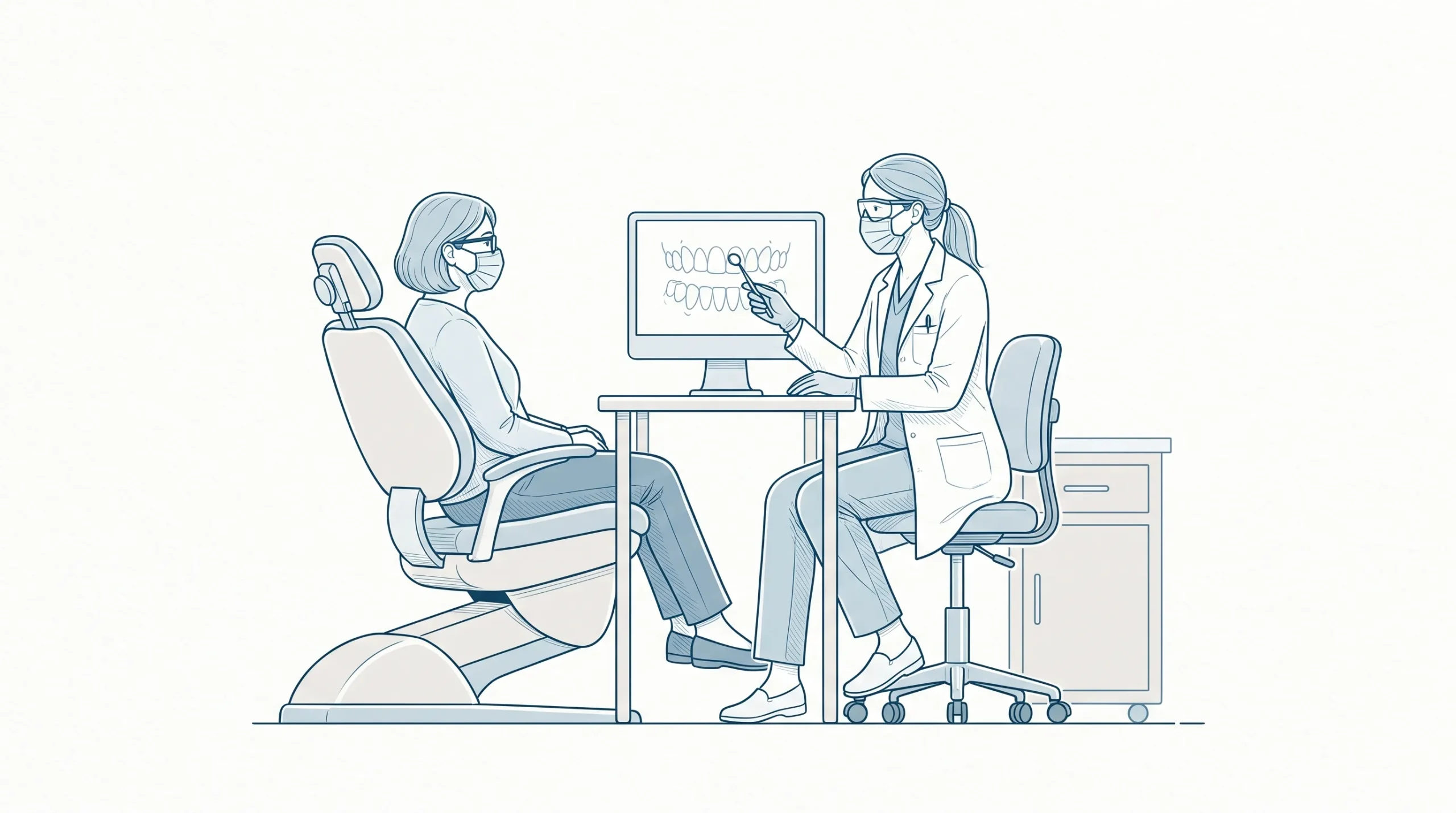
Comfort and communication needs also belong in your plan. You can mention dental anxiety, a sensitive gag reflex, hearing or mobility needs, or a preference for explanations before each part of the examination. Discussing these needs early can help shape care for dental problems around your circumstances, although the available adjustments will depend on the appointment.
Plan for costs without committing to treatment in advance
It is reasonable to ask about the expected consultation fee before attending. You can also ask whether imaging or other assessments may involve additional charges. An initial estimate may change if the examination identifies something that could not be confirmed over the phone.
After the assessment, ask for an explanation of the findings, reasonable options and likely costs before agreeing to non-urgent treatment. Where relevant, discuss whether monitoring, a temporary measure or a different treatment approach could be considered. Not every option will be suitable for every tooth or patient.
A useful financial plan separates the cost of investigating a concern from the cost of treating it. For private health insurance, ask for relevant item numbers so you can check your own benefits and limits with your insurer. A quotation from the practice does not confirm your rebate.
Bright Smiles offers payment plans. If you are considering one, its guide to budgeting for care with a teeth payment plan outlines questions to ask about repayments, fees and conditions.
Budgeting for care for dental problems should support informed choices, not pressure you into a procedure. Tell the dentist if cost is a concern so priorities and clinically appropriate alternatives can be discussed.
Decide what you need to understand before leaving
You do not need to arrive with a long questionnaire. Choose the two or three questions that matter most to you, such as what is causing the symptoms, which decisions need to be made soon and what can reasonably wait.
Ask the dentist to explain the potential benefits, risks and limitations of any proposed treatment. Dental procedures carry risks, and suitability depends on your oral health, medical history and individual circumstances. Treatment experiences and outcomes vary.
Before leaving, make sure you understand any temporary-care instructions, the next step and which changes should prompt another call. If several concerns need attention, ask how they have been prioritised. A clear plan should distinguish symptom management from treatment intended to address the underlying problem.
Frequently asked questions
Can I wait if the toothache goes away? Pain can fluctuate, so improvement alone does not confirm that the cause has resolved. Keep the assessment you have arranged unless the dental team advises otherwise, and report any new symptoms. Ongoing care for dental problems should be based on the findings, not pain levels alone.
What if I cannot tell which tooth hurts? Describe the general area and what you notice. Pain can be difficult to locate, and you are not expected to identify the tooth before attending. Avoid repeatedly biting on objects or applying cold substances to test it.
Does Medicare cover dental appointments? Medicare generally does not cover routine dental treatment. Eligible children may receive benefits for certain services through the Child Dental Benefits Schedule. Check eligibility, remaining benefits and any likely out-of-pocket costs before treatment.
Do I have to agree to treatment at the first visit? You can ask questions, request an explanation of alternatives and take time to consider non-urgent treatment. If a decision is time-sensitive, ask the dentist to explain why and what the risks of delaying may be.
Discuss your concern with Bright Smiles
If you need care for dental symptoms or a change in your oral health, an examination can help identify the cause and clarify your options. To discuss your concerns, you can book an appointment with the team at Bright Smiles at either the Brightwater or Currimundi location on the Sunshine Coast. When booking, mention your symptoms, relevant health information and any support needs.