

If you have a sudden toothache, cracked tooth, knocked-out tooth or swelling around a tooth, it is reasonable to wonder whether you are dealing with emergency teeth symptoms. The safest first step is to stay calm, protect the tooth or injured area, use simple first aid and contact a dentist for advice as soon as practical. Some situations need prompt dental care, and a small number need urgent medical care first, especially if swelling affects breathing or swallowing.
Start by checking for signs that need medical help first
A tooth problem is often managed by a dentist, but some symptoms are broader medical emergencies. Call 000 or go to the nearest emergency department if swelling is affecting your breathing or swallowing, bleeding cannot be controlled with gentle pressure, there has been significant facial or jaw trauma, swelling is spreading towards the eye or neck, or you feel very unwell with fever, confusion or rapid deterioration.
If those danger signs are not present, phone a dental practice and explain what happened, when symptoms started and whether pain, swelling, bleeding or a broken tooth is involved. This helps the team decide whether you may need a prompt appointment or whether temporary care at home is reasonable until you can be seen.
Bright Smiles sees patients at its Brightwater and Currimundi locations on the Sunshine Coast. For a broader overview of urgent dental situations, you can also read Bright Smiles' guide on what to do if you need emergency dental treatment.
Emergency teeth symptoms that need prompt dental advice
In the first few minutes, focus on what you can see and feel. A tooth that has been knocked out, a deep crack, swelling around the gum or face, a bad taste with pus, or severe pain that does not settle are all reasons to contact a dentist rather than simply waiting to see what happens.
| What you notice | Why it may matter | Sensible next step |
|---|---|---|
| Knocked-out adult tooth | The tooth and surrounding ligament can dry out | Store it correctly and contact a dentist promptly |
| Cracked or broken tooth with pain | The nerve or deeper tooth structure may be involved | Avoid chewing on it and arrange dental assessment |
| Swelling, pus or a bad taste | These can be signs of infection | Seek dental advice, and medical care if swelling spreads or affects breathing |
| Severe toothache that keeps returning | Decay, infection, trauma or gum issues may be involved | Book an examination to identify the cause |
| Lost filling or crown | The tooth may be exposed or sharp | Keep the crown if you have it and avoid household glue |
| Bleeding after injury | Soft tissue or tooth-supporting structures may be injured | Apply gentle pressure and seek advice if it does not settle |
Emergency teeth concerns are not all the same. A small chip that is not sore can often be assessed at a routine appointment, but trauma, infection signs or pain that keeps returning should be discussed with a dental professional. If you are unsure, describe the symptoms to the dental team rather than trying to decide alone.
What to do at home before your dental appointment
Home care is temporary. It may help protect the tooth or ease symptoms for a short time, but it does not treat the underlying cause. Avoid chewing on the affected side, keep the area as clean as you can and follow medicine labels carefully if using over-the-counter pain relief.
If an adult tooth has been knocked out
Hold the tooth by the crown, which is the white part normally visible in the mouth. Avoid touching or scrubbing the root. If the tooth is dirty, briefly rinse it in milk or saline. If it is an adult tooth and you can do so safely, it may be placed gently back in the socket without forcing it, then held in place by biting on clean gauze or cloth.
For emergency teeth involving a knocked-out adult tooth, time and storage matter because the ligament cells on the root can dry out. If the tooth cannot be put back in, store it in milk, saliva or saline and contact a dentist promptly. Do not reinsert a baby tooth, as this may affect the developing adult tooth underneath.
If a tooth is chipped, cracked or broken
Rinse your mouth gently with warm water to clear debris. If there is facial swelling from an injury, a cold compress against the outside of the cheek may help reduce swelling. Save any tooth fragments if you can, as the dentist may want to examine them.
If a sharp edge is rubbing your cheek or tongue, orthodontic wax from a pharmacy may help cover it temporarily. Sugar-free chewing gum can sometimes be used for a very short period if wax is not available, but avoid chewing it. Do not use superglue, craft glue or hardware products in the mouth.
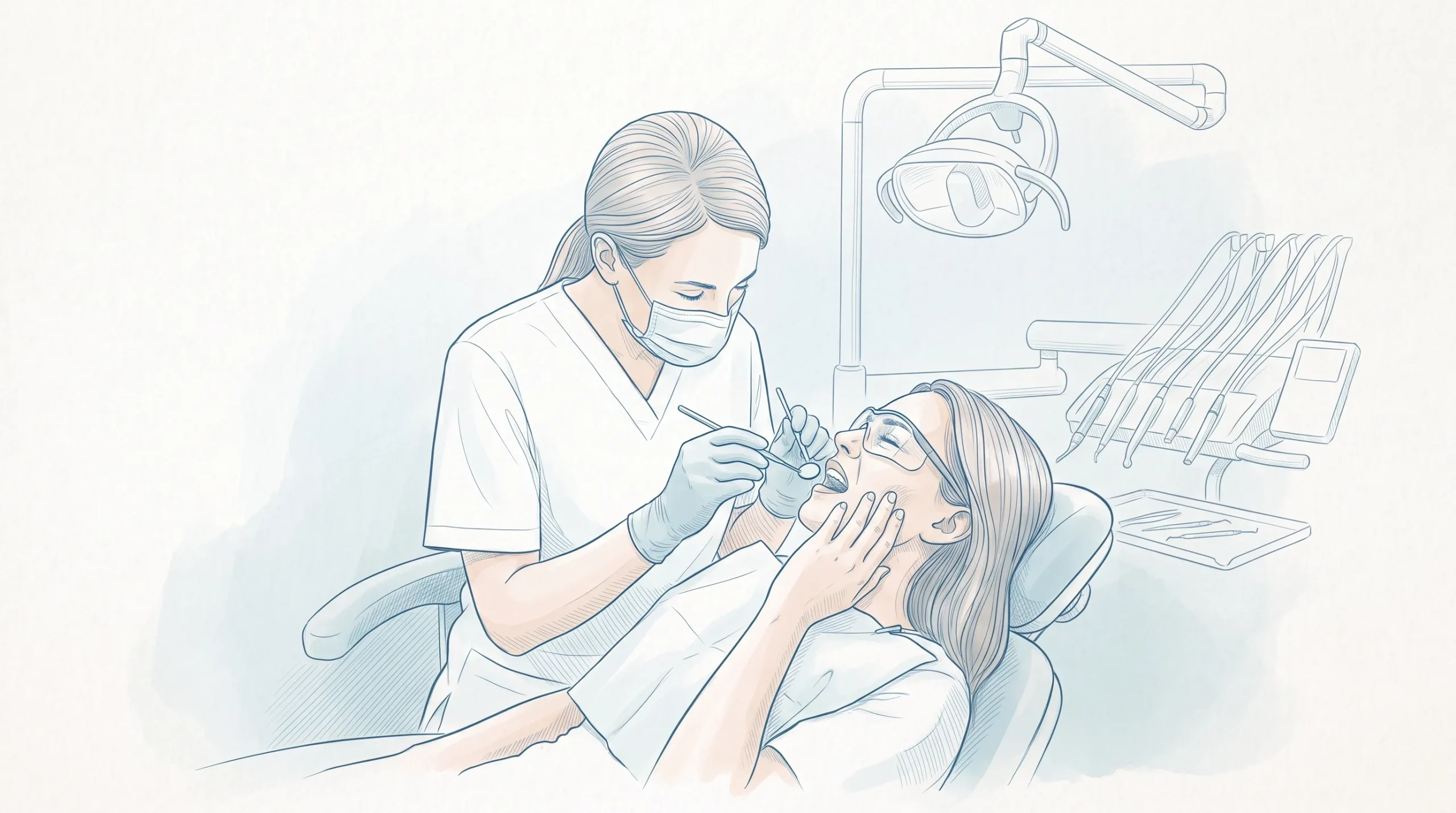
If you have severe toothache, abscess signs or swelling
Toothache can come from several causes, including decay, a cracked tooth, gum inflammation, trauma or infection. Gently floss around the sore tooth in case food is trapped, rinse with warm salty water if you can spit safely and avoid very hot, cold or sweet foods if they trigger pain.
If emergency teeth symptoms include facial swelling, a pimple-like bump on the gum, pus, fever or a bad taste that keeps returning, contact a dentist for advice. Healthdirect's toothache advice also notes that dental pain should be assessed by a dentist, especially when it is severe, persistent or associated with swelling. Antibiotics are not always required and, when they are used, they do not remove the source of the dental problem by themselves.
If a filling, crown or orthodontic wire breaks
If a crown comes off, keep it in a small container and bring it to your appointment. Avoid trying to glue it back yourself. If a filling is lost, keep the area clean and avoid chewing hard foods on that side until the tooth can be assessed.
For a loose orthodontic wire, do not cut it unless you have been specifically instructed by a dental professional, as loose pieces can be swallowed or inhaled. If wax can be placed over the irritating area, this may reduce rubbing until you receive advice.
What an emergency dental appointment may involve
When emergency teeth are assessed, the appointment is usually focused on identifying the source of the problem and reducing the risk of it getting worse. Your dentist may ask about your symptoms, medical history, medicines, allergies, recent dental work and how the injury or pain started.
The examination may include checking the affected tooth, gums, bite and surrounding soft tissues. Dental X-rays may be recommended if the dentist needs to assess the tooth root, bone, infection, fracture pattern or areas that cannot be seen directly.
Possible treatment options depend on the diagnosis. They may include smoothing a sharp edge, placing a temporary or definitive filling, draining an infection where appropriate, root canal treatment, a crown, extraction or referral for more complex care. Your dentist can explain the potential benefits, risks, costs and alternatives before treatment. Outcomes, recovery and treatment experiences vary between patients.
Mistakes that can make a tooth problem harder to manage
A clear plan for emergency teeth can help you avoid common mistakes made in a stressful moment. The aim is to protect the tooth and soft tissues until a dentist can assess what is happening.
- Do not ignore swelling that is spreading, especially if it affects breathing, swallowing, the eye or the neck.
- Do not place aspirin directly on the gum, as it can irritate or burn the soft tissue.
- Do not use household glue on teeth, crowns, dentures or fillings.
- Do not keep chewing on a cracked or painful tooth to test it.
- Do not reinsert a knocked-out baby tooth unless a dental professional specifically advises you to do so.
- Do not assume pain has gone because the problem has healed, as some infections can temporarily feel less painful.
If dental anxiety has made it harder to arrange care in the past, tell the dental team when you call. Practical steps such as explaining what will happen, taking breaks where appropriate and discussing options before treatment may make the appointment easier to manage.
Reducing the chance of another urgent tooth problem
Not every urgent tooth problem can be prevented, particularly accidents during sport, falls or unexpected biting injuries. Even so, everyday habits can reduce some risks. Brushing twice daily with fluoride toothpaste, cleaning between teeth, limiting frequent sugary snacks and drinks and attending regular dental checks can help identify problems before they become more difficult to manage.
If you play contact sport, ask your dentist about a custom mouthguard. If you grind or clench your teeth, your dentist can assess whether a protective appliance or other management options may be suitable. These choices depend on your oral health, bite, habits and individual circumstances.
Preparation also matters when you are away from your usual dentist. If you are relocating or spending extended time away from the Sunshine Coast, add dental contacts to the same planning file as housing, banking and school research. For example, someone looking into manufactured homes in San Antonio would also benefit from noting local health services before a tooth problem occurs. Keeping this kind of information handy can make emergency teeth situations less confusing if symptoms appear outside your normal routine.
Frequently asked questions
Is a toothache always a dental emergency? Not always. Mild, brief sensitivity may not be urgent, but severe pain, pain that wakes you, swelling, fever, trauma or pain that keeps returning should be discussed with a dentist.
Can a broken tooth wait until tomorrow? It depends on pain, swelling, bleeding and how much tooth structure is involved. Avoid chewing on the tooth and call a dentist for advice, especially if the tooth is painful or the break is deep.
What should I do if my child knocks out a baby tooth? Do not place the baby tooth back into the socket unless a dental professional specifically advises it. Store the tooth if you have it, comfort the child and contact a dentist for guidance.
Do I need antibiotics for a dental infection? Antibiotics are only appropriate in some situations and must be prescribed by a qualified health professional. Dental treatment is often needed to address the source of the infection.
Can Bright Smiles assess emergency teeth concerns? Bright Smiles can assess urgent tooth pain, broken teeth and related concerns at its Brightwater and Currimundi locations. Availability and suitable treatment depend on an appointment and clinical findings, so contact the practice for advice.
Arrange a dental assessment on the Sunshine Coast
A dental examination can help determine the cause of sudden tooth pain, swelling, a broken tooth or dental trauma. Your dentist can then explain which options may be appropriate for your oral health, medical history and symptoms.
To discuss your concerns, you can book an appointment with Bright Smiles at either the Brightwater or Currimundi location. If you have trouble breathing or swallowing, uncontrolled bleeding or significant facial trauma, seek emergency medical care first.