

Healthy smiles dental habits are easier to keep when they fit into real family life. For many households, the challenge is not knowing that brushing, flossing and regular dental visits matter. It is finding a routine that still works when school lunches, sport, work, childcare, homework and bedtime all compete for attention.
The good news is that family oral care does not need to be complicated. A few consistent habits, repeated most days, can make a meaningful difference to how well children and adults care for their teeth and gums. Bright Smiles sees families at both the Brightwater and Currimundi locations on the Sunshine Coast, and many parents ask the same practical question: how do we make dental care manageable at home?
Healthy smiles dental habits that fit a busy week
A useful family dental routine is simple enough to repeat when everyone is tired. The aim is not perfection. It is consistency.
For most families, the core routine includes brushing twice daily, cleaning between teeth where needed, choosing water as the usual drink, limiting frequent sugary snacks and drinks, and having regular dental check-ups based on individual risk and needs. The Australian Dental Association's consumer oral health information is a helpful starting point for general guidance on toothbrushing, fluoride and family oral care.
Children learn these habits slowly. They may need reminders, supervision and help with technique for longer than parents expect. Adults also benefit from making their own oral care visible, because children tend to copy what they see more than what they are told.
A good rule for busy households is to connect oral care to routines that already happen. Brushing after pyjamas go on, keeping floss near the toothbrush, or placing water bottles beside school bags can reduce the number of decisions everyone has to make.
| Busy family moment | Simple dental habit | Why it can help |
|---|---|---|
| Morning rush | Brush before shoes and bags | Links brushing to a routine that already happens daily |
| School or childcare lunch prep | Pack water as the main drink | Reduces frequent exposure to sugary or acidic drinks |
| After dinner | Move bedtime brushing earlier | Avoids brushing becoming a tired, last-minute battle |
| Sport days | Keep a water bottle and mouthguard together if a mouthguard is used | Makes protective habits easier to remember |
| Weekend reset | Replace worn toothbrushes and restock floss | Keeps supplies ready before the week begins |
Make brushing less of a battle
Brushing can become stressful when it is left until the very end of the day. Young children are often tired by then, and older children may be distracted or reluctant. Moving brushing earlier, such as straight after dinner or before story time, can make the routine calmer.
The toothbrush matters too. A brush that is too large or too firm can make brushing uncomfortable, especially for children with small mouths or adults with sensitive gums. A soft-bristled toothbrush with a small head is often a sensible choice, but individual needs can vary. Bright Smiles has a practical guide to choosing the right toothbrush if you are unsure what to look for.
For children, short and predictable steps can help. A simple pattern such as outside surfaces, inside surfaces, then chewing surfaces gives them a structure to follow. A timer, song or visual routine chart can also make brushing easier to understand.
Families often use the same principles that work in childcare and preschool settings: predictable cues, repetition and a calm environment. Early learning services such as Aubrey Early Learning Centre highlight how daily routines and learning through play can support children, and the same idea can be useful at home when toothbrushing becomes a familiar part of the day rather than a surprise request.
Fluoride toothpaste, age and supervision
Fluoride toothpaste helps strengthen tooth enamel and is commonly recommended as part of routine oral care. The type and amount of toothpaste can depend on a child’s age and individual dental risk, so parents should follow current Australian guidance and ask their dentist if unsure.
As a general habit, supervise young children while they brush and encourage them to spit out toothpaste rather than swallow it. Some children rush brushing or only clean the front teeth, so a quick parent check can be useful. Older children and teenagers may still need reminders, especially when their routines change with school, sport or part-time work.
If your child has a history of decay, wears orthodontic appliances, has difficulty brushing, or often snacks throughout the day, a dentist may suggest more tailored preventive advice. That might include changes to brushing technique, dietary habits or recall intervals. Any recommendation should be based on an individual assessment.
Food and drink habits that protect teeth between brushing
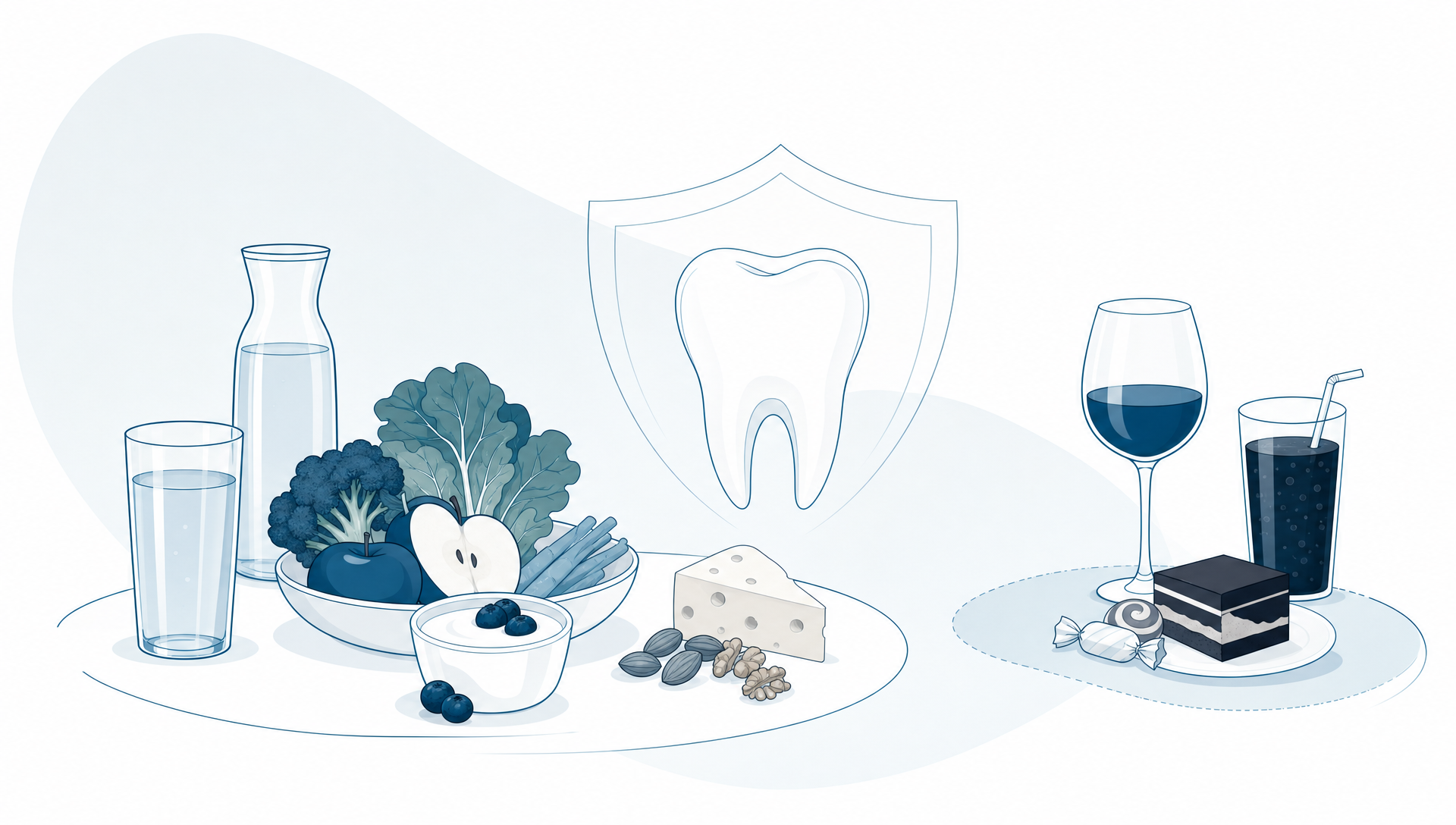
Tooth decay is influenced not only by how much sugar someone has, but also how often teeth are exposed to sugars and acids. Grazing throughout the day, sipping juice over a long period, or having sweet drinks between meals can increase the time teeth are under acid attack.
This does not mean families need to be strict or unrealistic. A more practical approach is to make everyday choices easy and keep occasional foods as occasional foods.
Helpful habits can include:
- Offering water as the usual drink, especially between meals.
- Keeping sweet drinks, juice and soft drinks for occasional situations rather than daily sipping.
- Packing tooth-friendly snacks such as cheese, plain yoghurt, vegetables, whole fruit, or nuts where suitable and allowed.
- Encouraging children to finish snacks in one sitting rather than nibbling over a long period.
- Checking labels on packaged snacks, because some foods marketed as healthy can still be sticky or high in sugar.
For babies, toddlers and preschool-aged children, bottle and bedtime habits can also matter. Falling asleep with milk or sweet drinks in the mouth may increase decay risk. If you are unsure what is appropriate for your child’s age, your dentist or child health professional can give advice suited to your circumstances.
Flossing and cleaning between teeth
Brushing cleans many tooth surfaces, but it does not always clean well between teeth. Once teeth touch side by side, food and plaque can collect in those spaces. This is where floss or other interdental cleaning tools may be recommended.
Many parents find flossing children’s teeth awkward at first. Floss holders may be easier than traditional string floss for some families, although the best option depends on the spaces between teeth and what the child will tolerate. Adults with tight contacts, crowns, bridges, implants or orthodontic appliances may need specific tools and instructions.
If gums bleed when flossing starts, it may be due to inflammation from plaque buildup, but bleeding can also have other causes. If bleeding persists, is heavy, or is associated with swelling or pain, it is sensible to arrange a dental assessment.
Bright Smiles has more general guidance on taking care of your teeth and gums if you would like a broader home care refresher.
Dental visits without adding pressure to family life
Regular dental visits give your dentist a chance to check for early signs of tooth decay, gum concerns, tooth wear, bite issues and other changes that may not be obvious at home. The right check-up interval is not the same for every person. It depends on age, oral health, medical history, decay risk, gum health and individual circumstances.
For busy families, it can help to keep a simple note in your calendar for dental check-ups, toothbrush replacement and mouthguard review if relevant. If a child is nervous about visiting the dentist, it may also help to talk about the appointment in neutral language. Avoid describing dental care as a punishment or using words that may increase worry.
Dental anxiety is common in both children and adults. If someone in your family feels nervous, let the dental team know when booking or at the start of the appointment. There may be ways to make the visit feel more manageable, such as taking things slowly, explaining what is happening, or agreeing on a signal to pause. Bright Smiles has an article on ways to deal with dental anxiety that may be useful before an appointment.
When to arrange a dental assessment
Not every dental concern is urgent, but some symptoms should be checked promptly. A dental examination can help determine the cause and whether treatment, monitoring or home care changes may be appropriate.
Consider arranging an assessment if someone in your family has:
- Toothache that does not settle or keeps returning.
- Swelling of the gum, face or jaw.
- A broken, chipped or knocked tooth.
- Bleeding gums that persist despite gentle brushing and cleaning between teeth.
- Sensitivity that is new, worsening or affecting eating and drinking.
- Bad breath that does not improve with routine cleaning.
- White, brown or dark marks on teeth that may indicate early decay or other changes.
- Jaw pain, clenching, grinding or headaches that may be related to the mouth or bite.
If there is facial swelling, fever, difficulty swallowing, difficulty breathing, or trauma involving the head or face, seek urgent medical or dental advice.
A realistic family routine to try this week
If your family routine has slipped, avoid trying to change everything at once. Choose one or two habits and make them easy to repeat. A small, consistent change is often more useful than a complicated plan that only lasts a few days.
You might start with brushing before bedtime stories, putting floss picks beside the toothbrushes, switching the default drink to water, or placing spare toothbrushes in the bathroom cupboard. For teenagers, a straightforward conversation about fresh breath, sport, braces, social routines or convenience may work better than repeated reminders.
It can also help to give each family member a role. Younger children might choose the brushing song. Older children might refill water bottles. Adults can model brushing and flossing rather than only supervising. The aim is to make oral care feel like a normal household habit, not a daily argument.
Frequently Asked Questions
How often should my family brush their teeth? Most people are advised to brush twice a day with fluoride toothpaste, but the type and amount of toothpaste can vary by age and individual needs. Your dentist can provide guidance for babies, young children, teenagers and adults.
When should children start flossing? Flossing may be useful once teeth touch side by side, because a toothbrush may not clean those spaces well. Parents usually need to help young children, and a dentist can show a technique that suits your child’s mouth.
Are electric toothbrushes better for families? Electric toothbrushes can be helpful for some people, especially if they improve brushing time or technique. A manual toothbrush can also be effective when used well. Comfort, brush size, soft bristles and consistent technique all matter.
How often should children see a dentist? The right timing varies. Some children need more frequent reviews because of decay risk, orthodontic concerns or difficulty brushing, while others may be advised to attend less often. A dentist can recommend a recall interval after assessing your child’s oral health.
What if my child refuses to brush? Try moving brushing earlier, using a timer or song, giving limited choices, and keeping the routine calm and predictable. If refusal continues, or brushing seems painful, a dental visit can help check whether sensitivity, ulcers, decay or another issue is contributing.
Planning dental care for your family
Healthy family dental habits work best when they are realistic, consistent and suited to each person’s age and needs. If you are unsure about your child’s brushing, diet, tooth development, sensitivity, anxiety or check-up timing, a dental examination can help clarify what is happening and which options may be appropriate.
To discuss your family’s oral health, you can book an appointment with Bright Smiles at either the Brightwater or Currimundi location. The team can assess your concerns, explain potential benefits, risks and alternatives, and suggest a practical plan based on your individual circumstances.