

Dental care is not a one-size-fits-all routine. The basics stay familiar, brushing, cleaning between teeth, sensible food and drink choices, and regular dental visits, but the details often shift as work, family, health, medications and ageing change the mouth.
For many adults on the Sunshine Coast, the most useful approach is to match care to your current stage of life rather than waiting for a problem to become uncomfortable. If you are also organising appointments for children, parents or other family members, this practical guide to family dental care at every age gives a broader age-based overview. This article focuses on adult dental needs and the everyday habits that may help you protect your teeth and gums over time.
Why dental care changes through adult life
Adult teeth are designed to last, but they are not static. Enamel can wear, gums can recede, old fillings or crowns may need review, medical conditions can affect saliva and some medicines may change the risk of dry mouth or decay.
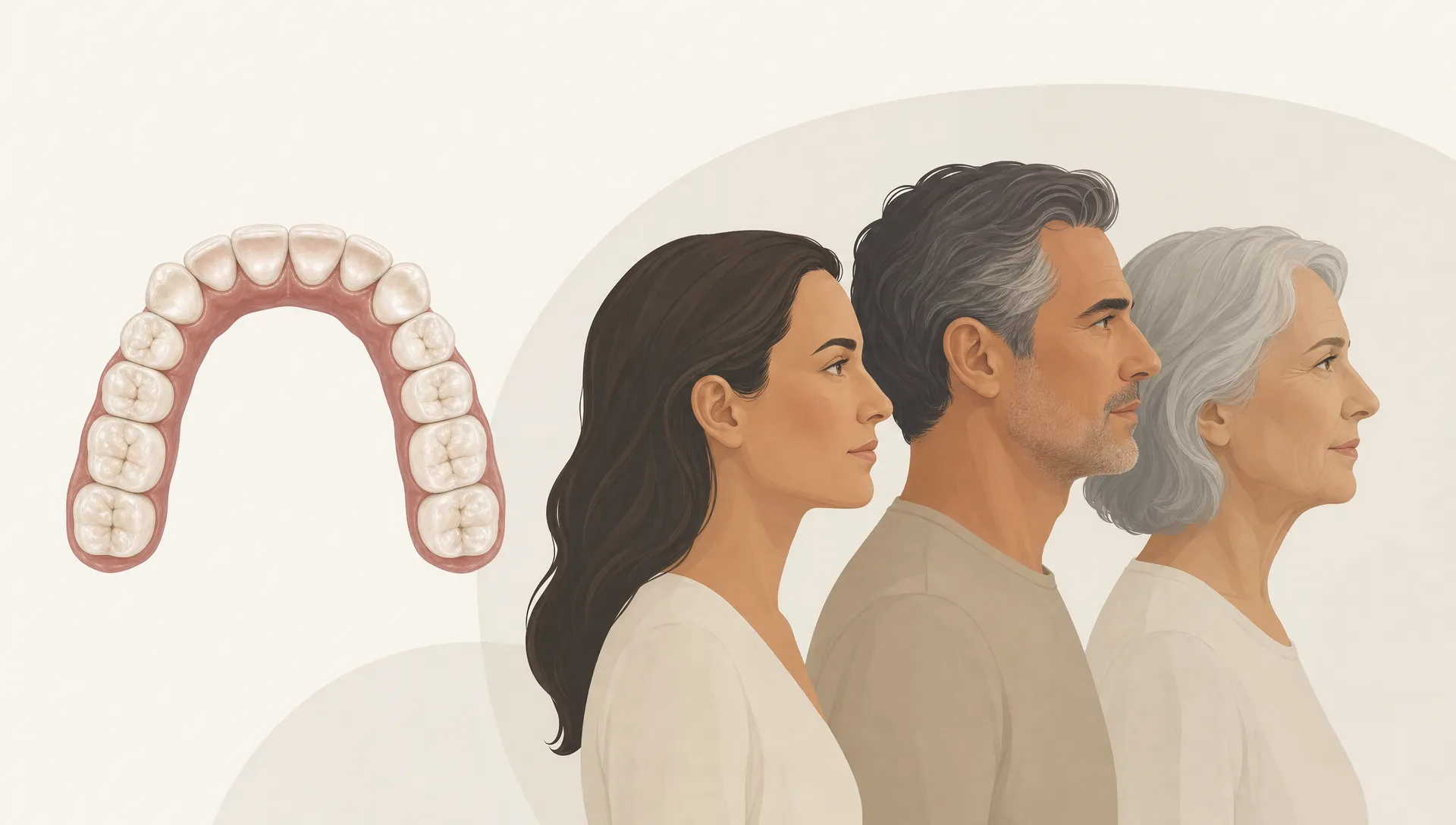
Your priorities at 25 may be different from your priorities at 65. A younger adult may need help with wisdom teeth, sports mouthguards or orthodontic relapse. A midlife adult may be managing gum health, tooth grinding or older dental work. An older adult may be focusing on comfort, chewing function, dentures, implants or caring for teeth with limited hand strength.
Age ranges are only a guide. Your dentist will consider your oral health, medical history, risk factors, lifestyle and preferences before suggesting any care plan.
| Adult stage | Common dental care priorities | Helpful focus |
|---|---|---|
| Late teens to early 30s | Wisdom teeth, diet changes, sports injuries, orthodontic relapse, cosmetic questions | Build consistent habits and assess new concerns early |
| 30s and 40s | Gum health, stress-related grinding, family routines, existing fillings | Prevent small problems becoming harder to manage |
| 50s and 60s | Tooth wear, gum recession, dry mouth, crowns, bridges or missing teeth | Review comfort, function and long-term maintenance |
| Later adulthood | Medication effects, dexterity changes, dentures, implants, dry mouth, oral soft tissue changes | Keep care practical, comfortable and tailored |
Dental care foundations that matter at every adult stage
The Australian Dental Association’s public advice includes brushing twice daily with fluoride toothpaste and cleaning between the teeth daily. Fluoride helps strengthen tooth enamel and reduce the risk of tooth decay. Cleaning between teeth matters because a toothbrush cannot reach every surface, especially near the gumline and between molars.
Technique matters as much as frequency. Scrubbing hard can irritate gums and contribute to tooth sensitivity over time. A soft toothbrush, gentle pressure and attention to the gumline are usually more useful than aggressive brushing. If floss feels difficult, interdental brushes or other between-teeth cleaning aids may be worth discussing with your dentist or oral health professional.
Diet and drink habits also play a role. Frequent sipping on sweet drinks, sports drinks or acidic beverages can increase acid exposure on enamel. Water is a tooth-friendly default, especially in warm Queensland weather when dehydration and dry mouth can make the mouth feel uncomfortable.
Regular dental examinations are not only about finding cavities. They may include checking the gums, reviewing old dental work, assessing tooth wear, discussing jaw or bite concerns and checking the soft tissues of the mouth. The right check-up interval is individual, so your dentist may suggest a timing based on your risk of decay, gum disease, medical factors and previous dental history. Bright Smiles has a more detailed explanation of why dental check-ups are important if you would like more context.
Late teens to early 30s: set up habits that fit real life
This stage often comes with more independence, busier schedules and changing routines. Study, shift work, travel, sport and moving out of home can all make dental care feel less structured.
A simple routine is usually easier to maintain than a complicated one. Keep fluoride toothpaste somewhere visible, replace your toothbrush when bristles splay and choose a between-teeth cleaning method you are willing to use. If you play contact sport or recreational activities with a risk of knocks to the mouth, ask about a mouthguard. A custom-fitted mouthguard may provide better fit and comfort than many over-the-counter options, although suitability depends on the sport, your teeth and your dentist’s assessment.
Wisdom teeth may also become a focus in young adulthood. Some wisdom teeth come through without causing issues. Others can become difficult to clean, partly emerge or cause symptoms such as swelling, pain, bad taste, food trapping or pressure. A dental examination and imaging, if needed, can help assess what is happening. Removal is not automatically required for everyone.
Cosmetic treatments, including whitening or clear aligners, are also common questions at this age. These options should be discussed after a dental assessment, particularly if there is decay, gum inflammation, enamel wear, sensitivity or existing fillings on visible teeth. All dental procedures carry potential benefits and risks, and treatment experiences vary between patients.
Pregnancy and early parenthood: keep care practical
Pregnancy can affect the mouth for some people. Hormonal changes may make gums more likely to bleed or feel tender, particularly if plaque is building up around the gumline. Nausea, vomiting and food cravings can also change acid and sugar exposure.
If you are pregnant or planning pregnancy, tell your dental team. Routine dental care is generally considered part of overall health care during pregnancy, but the timing and type of care should be considered with your individual circumstances in mind. If morning sickness is causing vomiting, rinsing with water afterwards and waiting before brushing can help reduce acid abrasion on softened enamel.
Early parenthood can make self-care harder. Keeping a toothbrush and floss or interdental brushes in an easy place, drinking water regularly and booking appointments before symptoms become distracting may help maintain care during a demanding season.
30s and 40s: protect gums, enamel and existing dental work
By the 30s and 40s, many adults have a dental history that may include fillings, orthodontic treatment, whitening, extractions or crowns. The aim is often maintenance rather than major intervention.
Gum health deserves attention at this stage. Bleeding when brushing or cleaning between teeth is common, but it should not be ignored. It may be related to plaque build-up, gum inflammation, brushing technique, smoking or vaping, medical factors or other causes. A dentist can assess whether the issue is limited to the gums or whether there are signs of more advanced gum disease.
Stress can also show up in the mouth. Clenching and grinding may contribute to tooth wear, jaw muscle tenderness, headaches on waking or cracked teeth for some people. A dentist can look for signs of wear and discuss options such as monitoring, behaviour changes or a splint if appropriate.
Existing fillings and crowns should be reviewed over time. Dental work can last for many years, but it is not immune to wear, cracks or decay at the edges. Early assessment may give you more options than waiting until a tooth breaks or becomes painful. If you are trying to improve your gum routine, this article on dental hygiene mistakes that can affect your gums explains a few common habits that can unintentionally cause irritation.
50s and 60s: review wear, restorations and dry mouth
In the 50s and 60s, dental care often becomes more focused on preserving comfort and function. Teeth may show wear from decades of chewing, grinding or acidic exposure. Gums may recede, which can expose root surfaces that feel more sensitive and can be more vulnerable to decay than enamel.
Dry mouth is another important issue. Saliva helps protect teeth, neutralise acids and support comfortable chewing and speaking. Some medicines and health conditions can reduce saliva flow. If your mouth often feels dry, sticky or sore, or you are waking at night to sip water, mention it at your appointment. Your dentist may discuss oral hygiene changes, fluoride options, saliva substitutes or referral to your GP if a medication review may be relevant.
This stage is also a good time to review older dental work. Fillings, crowns, bridges, implants and dentures need ongoing care and professional monitoring. A crown or bridge may still require careful cleaning around the margins. Dental implants are not natural teeth, but the gums and bone around them still need maintenance. Dentures should also be checked for fit, comfort and cleaning habits.
If you are considering restorative or cosmetic treatment, ask about the full picture. A single tooth may need a filling, crown, root canal treatment, extraction or monitoring depending on its condition. A missing tooth may be managed in different ways, including leaving the space, a denture, a bridge or an implant, depending on your oral health, anatomy, budget, medical history and goals. No option suits every person.
Later adulthood: focus on comfort, function and independence
Later adulthood can bring new practical considerations. Some people keep most or all of their natural teeth. Others use full or partial dentures, have implants, or have a mix of natural teeth and dental restorations. The right dental care plan depends on what is present in the mouth and how easy it is to keep clean.
Dexterity changes, arthritis, memory changes or reduced vision can make brushing and denture care more difficult. Small adjustments may help, such as using an electric toothbrush, choosing a larger-handled brush or setting up a simple routine with a carer if needed. These changes are not about doing more. They are about making oral care realistic.
Soft tissue checks become particularly important as people age. Ulcers, lumps, red or white patches, unexplained bleeding or a sore area that does not heal should be assessed. Many mouth changes are not serious, but it is better to have persistent symptoms checked rather than guessing.
For adults who wear dentures, fit and comfort can change over time as the mouth changes. Loose dentures can affect chewing, speech and gum comfort. Dentures also need cleaning, and they should generally be removed for periods as advised by your dentist to support the health of the mouth tissues.
When to book a dental appointment sooner than planned
Some dental issues can wait for a routine appointment, but others should be assessed promptly. Contact a dentist if you notice symptoms such as:
- Toothache that persists or wakes you at night
- Facial swelling, gum swelling or pus near a tooth
- A broken tooth, lost filling or damaged crown causing discomfort
- A knocked, loosened or moved adult tooth
- Bleeding gums that continue despite careful cleaning
- Denture pain, ulcers or sore spots that do not settle
- A mouth ulcer, lump or patch that lasts longer than about two weeks
- Jaw pain, difficulty opening or pain when biting
If symptoms are severe, spreading or associated with fever, difficulty swallowing or difficulty breathing, seek urgent medical or dental advice.
Making adult dental care easier if you are busy or anxious
Many adults delay care because they are busy, worried about cost, embarrassed about a gap in appointments or anxious about dental treatment. These are common concerns, and it is reasonable to tell the dental team what is on your mind.
If you have not seen a dentist for years, an examination can start with information gathering. Your dentist can check your teeth and gums, discuss any symptoms and explain possible next steps. You do not need to commit to treatment before understanding the benefits, limitations, risks and alternatives.
For dental anxiety, practical strategies may include booking a consultation first, asking for explanations before treatment, agreeing on a stop signal or bringing a support person if appropriate. Bright Smiles has written more about ways to deal with dental anxiety for patients who feel nervous about booking.
Payment and scheduling can also influence decisions. Ask for a treatment plan where appropriate, including which matters are more urgent and which can be monitored. This can help you make informed choices without feeling pressured into unnecessary care.
Frequently asked questions
How often should adults have a dental check-up? The right timing varies. Some adults benefit from six-monthly visits, while others may be advised to come more or less often depending on decay risk, gum health, medical history, oral hygiene and previous dental treatment.
Do dental care needs really change with age? Yes, they can. Younger adults may be more likely to ask about wisdom teeth, mouthguards or orthodontic relapse, while older adults may need more attention to dry mouth, gum recession, dentures, implants or existing restorations.
Is bleeding when brushing normal? Bleeding gums are common, but they are not something to ignore. They may be related to gum inflammation, brushing technique or other factors. A dental assessment can help identify the likely cause and appropriate care.
Can adults still improve their oral health after years without seeing a dentist? Many adults can make useful improvements with the right advice, although the options depend on the condition of the teeth and gums. A dentist can assess your current oral health and explain what may be suitable.
Should I see a dentist before whitening or cosmetic treatment? Yes, an examination is recommended before cosmetic dental treatment. Tooth decay, gum disease, sensitivity, enamel wear or existing restorations can affect whether a treatment is appropriate and what outcome may be realistic.
Planning your next stage of dental care
Good adult dental care is not about doing everything at once. It is about understanding your current risks, keeping daily habits manageable and getting professional advice before small concerns become harder to manage.
Bright Smiles sees adults and families at both the Brightwater and Currimundi locations on the Sunshine Coast. If you have noticed changes in your teeth, gums, bite, comfort or confidence in your current routine, a dental examination can help identify what is happening and which options may be appropriate for your circumstances.