

Severe tooth pain, a knocked-out adult tooth or swelling around a tooth can require emergency oral care. Difficulty breathing or swallowing, uncontrolled heavy bleeding or a serious facial injury needs urgent medical help instead: call 000. The right response depends on your symptoms and the injury, not just how much it hurts.
A tooth injury can need prompt attention even when there is little pain. Conversely, brief sensitivity does not always mean an emergency. This guide explains which changes should prompt a call, what can be done while arranging care and what an assessment may involve.
Bright Smiles sees patients at its Brightwater and Currimundi locations on the Sunshine Coast. For urgent symptoms, contact the practice directly rather than relying on an online appointment request.
When emergency oral care requires medical help
Call 000 if you have difficulty breathing or swallowing, heavy bleeding that will not stop or a serious facial injury. These situations may need ambulance or hospital care rather than a dental appointment.
Rapidly increasing swelling of the face or neck, particularly with fever or feeling very unwell, needs urgent medical assessment. Swelling affecting the eye also warrants urgent medical attention.
After a blow to the face, loss of consciousness, confusion or vomiting may indicate a head injury. Do not focus only on the damaged tooth or drive yourself if you are unwell.
When tooth pain needs a prompt dental assessment
You should contact a dentist promptly for emergency oral care if tooth pain is severe, worsening, interrupting sleep or making it difficult to eat. New swelling, pus, a bad taste or pain accompanied by fever also needs prompt advice.
An abscess is a collection of pus caused by infection. It may cause toothache, gum swelling or facial swelling, but symptoms alone cannot confirm the diagnosis. Healthdirect’s guidance on toothache explains common causes and when to seek care.
Use the following distinctions as a starting point, not as a diagnosis:
| What you notice | What to do |
|---|---|
| Breathing or swallowing difficulty, uncontrolled heavy bleeding or serious facial trauma | Call 000 |
| Rapidly spreading facial or neck swelling, swelling affecting the eye or swelling with marked illness | Seek urgent medical assessment |
| Severe or worsening toothache, localised swelling, pus or fever with dental symptoms | Contact a dentist promptly and describe the symptoms |
| A knocked-out permanent tooth | Seek immediate dental care and begin appropriate first aid |
| Brief sensitivity without swelling, injury or ongoing pain | Arrange a dental appointment; call sooner if symptoms persist or change |
Tell the practice about swelling or fever even if the pain is manageable. Pain intensity alone does not reliably indicate how urgent a problem is.
Tooth injuries can be urgent without much pain
After a dental injury, emergency oral care may be needed even if the tooth barely hurts. A tooth that has moved, become loose or changed the way your teeth meet needs prompt assessment.
A small chip without other symptoms may be less urgent than a displaced tooth, but the size of a visible chip does not reveal all the damage. Contact a dentist for advice, particularly if there is pain when biting, bleeding around the tooth or a sharp edge injuring the mouth.
If a permanent tooth has been knocked out
Act promptly. Healthdirect’s dental injury advice outlines first aid for knocked-out teeth.
- Hold the tooth by the crown: This is the white part normally visible in the mouth. Avoid touching the root.
- Rinse gently if it is dirty: Use milk or saline briefly. Do not scrub the tooth, scrape it or use disinfectant.
- Replace it only if safe: An alert, cooperative person may gently place a permanent tooth back in its socket and bite on a clean cloth to hold it. Do not force it or attempt this if there is a choking risk.
- Keep it moist if it cannot be replaced: Put it in milk and take it with you for immediate dental care. Do not wrap it in a tissue or leave it to dry.
If it might be a baby tooth
Do not put a knocked-out baby tooth back into its socket. Reinserting it can damage the developing adult tooth underneath. Arrange a dental assessment for the child.
If you are unsure whether the tooth is baby or permanent, keep it moist in milk and seek immediate advice rather than guessing.
Can symptoms wait for a routine appointment?
Not every dental concern requires emergency oral care, but persistent symptoms still deserve assessment. Brief sensitivity to cold that settles quickly, without swelling or injury, may be suitable for a standard appointment. A small, painless chip may also be less urgent, depending on its location and extent.
Call sooner if sensitivity starts lingering, pain becomes spontaneous, biting hurts or swelling develops. If you are unsure, describe the symptoms to the practice so the team can advise on the appropriate appointment timing.
Pain easing is not always a sign that the underlying problem has resolved. Painkillers can reduce discomfort without treating its cause. After an injury, damage inside a tooth may also become apparent later, which is why a dentist may recommend follow-up checks.
Avoid repeatedly testing a sore tooth by biting on it. This can aggravate discomfort and does not provide a reliable home diagnosis.
What to do while arranging an assessment
Temporary measures may help with discomfort, but they should not delay emergency oral care when there are warning signs. Avoid chewing on the affected side and choose soft foods if eating is uncomfortable.
A cold pack wrapped in a cloth can be held against the outside of the cheek after an injury. Do not apply ice directly to the skin or place heat over facial swelling.
Paracetamol or ibuprofen may provide temporary pain relief, but they are not suitable for everyone. Follow the label and ask a pharmacist if you are pregnant, take other medicines or have medical conditions. Do not exceed recommended doses or accidentally double up on the same ingredient in different products.
Do not place aspirin against a tooth or gum, puncture a swelling, use household glue to repair a tooth or take leftover antibiotics. These measures can cause harm or delay appropriate treatment.
Bright Smiles’ guide to emergency dental treatment covers broader first-aid situations. Home measures are temporary support, not a substitute for assessment.
What to tell the practice and expect at the visit
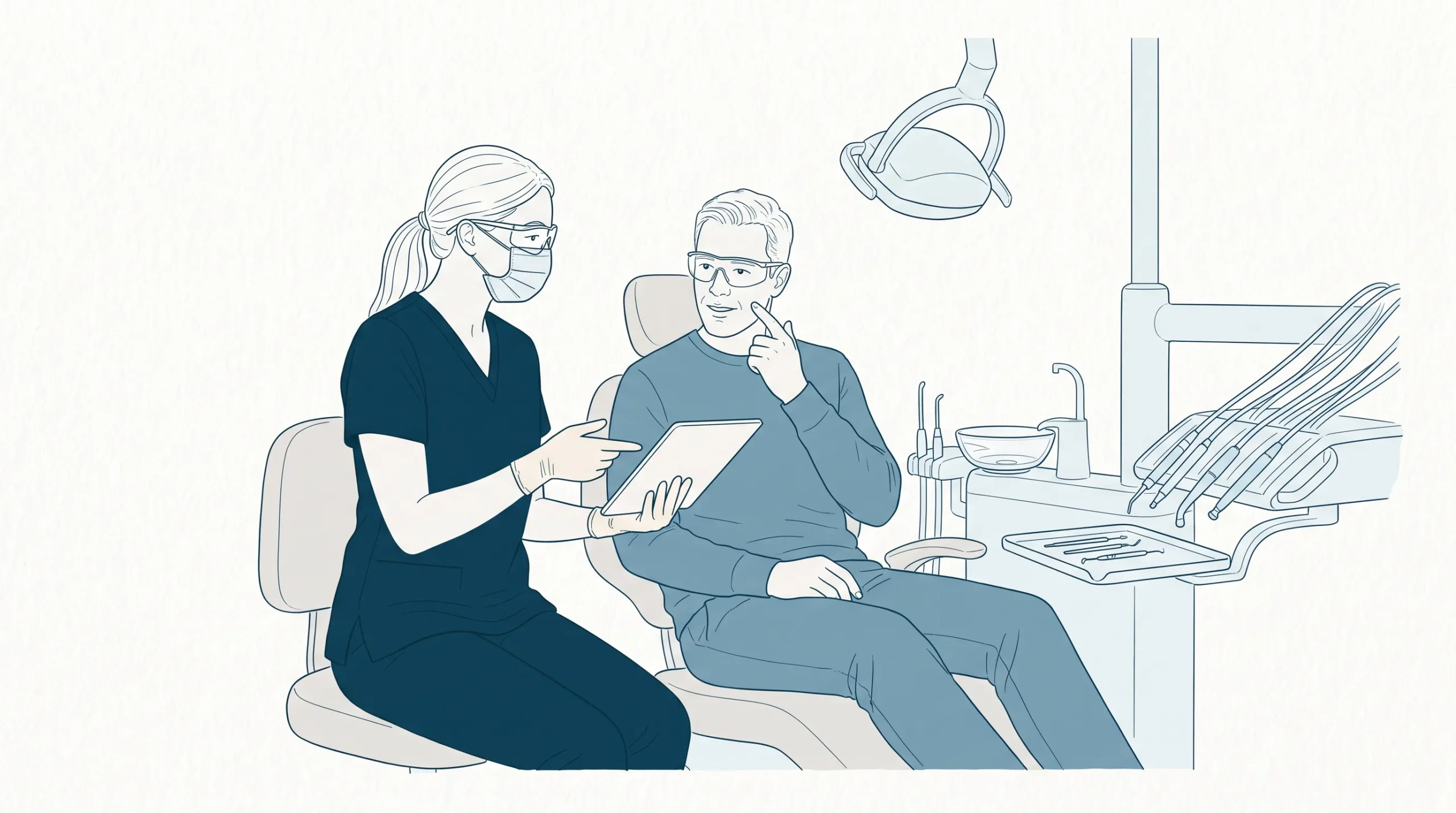
When calling about emergency oral care, explain when the problem began, whether it is worsening and whether there has been an injury. Mention swelling, fever, bleeding and any difficulty swallowing or opening your mouth.
Describe what the pain prevents you from doing, such as sleeping or eating, rather than only giving it a score. Tell the team about medicines you have taken, allergies, relevant medical conditions and pregnancy. If a tooth has been knocked out, explain how it has been stored.
Assessment comes before a treatment decision
The dentist may examine the tooth and surrounding tissues, check your bite and take X-rays where clinically appropriate. After an injury, they may also assess neighbouring teeth rather than only the visibly damaged one.
Depending on the findings, options may include a temporary repair, a filling, stabilising an injured tooth, root canal treatment or extraction. Root canal treatment removes damaged or infected tissue from inside a tooth; extraction means removing the tooth.
Antibiotics may be appropriate in some circumstances, but they do not replace treatment of the dental cause. An urgent visit may address the immediate problem, with further treatment or monitoring arranged later.
Your dentist should explain the relevant benefits, risks, alternatives and costs before treatment. Outcomes and recovery vary, and an injured tooth cannot always be saved. Bright Smiles’ overview of emergency dental services provides further context about the problems assessed by the practice.
Finding care outside usual hours
Check current opening hours and telephone the practice before travelling. Do not assume that an online appointment listing confirms immediate availability for emergency oral care.
Search visibility can be shaped by website optimisation and local SEO, so a high search ranking alone does not confirm that a practice is open or can manage your particular needs. Confirm those details directly.
If you are unsure whether symptoms need medical attention, Healthdirect’s nurse advice line is available on 1800 022 222. For breathing or swallowing difficulty, uncontrolled heavy bleeding or serious injury, call 000 rather than waiting for a dental practice to reopen.
Frequently asked questions
Is toothache an emergency if there is no swelling? It can be. Severe, worsening or persistent pain needs prompt dental advice even without visible swelling. Pain that interrupts sleep or eating is a reason to contact a dentist rather than wait for a routine check-up.
Can I wait if painkillers relieve the pain? Pain relief does not establish that it is safe to wait. Consider swelling, fever, injury and changes in symptoms as well. A dentist can advise on timing after hearing those details.
Does a broken tooth always need extraction? No. Some damaged teeth can be repaired, while others may need root canal treatment or extraction. The decision depends on the extent of damage and the condition of the tooth and surrounding tissues.
Should a child see a dentist after knocking out a baby tooth? Yes. Do not reinsert the tooth. A dentist can check the injury and advise whether follow-up is needed, including assessment of the developing adult tooth.
Arrange an assessment based on your symptoms
If you think you need emergency oral care, contact Bright Smiles directly and describe your symptoms so the team can advise on appointment timing. Bright Smiles sees patients at both the Brightwater and Currimundi locations. A dental assessment can help establish the cause and explain which options may be appropriate.