

Whether cosmetic dentistry and orthodontics may be considered depends on what you would like to change and what a dental examination finds. Cosmetic treatments generally address tooth colour, shape or surface appearance. Orthodontics moves teeth to change their position and, where appropriate, how they meet when you bite. Some people may benefit from a combined plan, while others may need only one approach or no treatment.
The useful starting point is understanding your concern, rather than choosing a procedure first. Healthy teeth do not need to be changed simply because their appearance differs from someone else’s.
Start with the concern, not the treatment
A tooth that looks uneven might be rotated, shorter than its neighbour, chipped or positioned differently in the gum. These concerns can look similar but call for different assessments.
Your dentist will distinguish between a change in tooth position and a change in the tooth itself. They will also check for decay, gum disease and other conditions that may need attention before elective treatment.
| Concern you would like assessed | Approach that may be discussed | Important distinction |
|---|---|---|
| Tooth colour or staining | Cleaning or whitening, depending on the cause | Whitening does not move teeth or change the colour of existing restorations |
| A small chip or shape difference | Composite bonding or another restoration | Adding material changes shape, not tooth position |
| Crowding, gaps or rotated teeth | Orthodontic assessment | Moving teeth is different from covering their visible surfaces |
| Teeth that do not meet comfortably | Assessment of the bite and possible orthodontic care | Appearance alone cannot establish the cause or suitable treatment |
Composite bonding involves applying tooth-coloured resin to a tooth. A restoration is a repair or replacement of tooth structure, such as a filling or crown. These terms describe different procedures with different maintenance needs.
For background on the appearance-focused options, Bright Smiles explains what cosmetic dentistry can involve.
When cosmetic dentistry and orthodontics may be considered together
A combined approach may be considered when tooth position and tooth appearance both matter to your goals. For example, moving teeth may address crowding, while a separate treatment may address a small chip that remains afterwards.
This does not mean that a combined plan is automatically preferable. Each proposed procedure should have a clear purpose, and your dentist should explain what would happen if you chose only part of the plan or decided against treatment.
Suitability depends on your oral health, medical history, bite, existing dental work and willingness to manage ongoing care. The amount of change you want also matters. A modest concern may not justify an extensive procedure.
Crowding or spacing alongside colour concerns
If you are concerned about both overlapping teeth and their colour, whitening alone will not change the overlap. Likewise, orthodontic treatment does not directly whiten teeth.
In this situation, cosmetic dentistry and orthodontics may address separate concerns, but they do not necessarily need to be undertaken together. You might decide that alignment is your priority and reconsider whitening later.
Not every gap needs closing. Some spacing reflects normal variation, while a new or widening gap may warrant an examination to check its cause. Covering or filling a space without assessing it first may overlook an underlying issue.
Bright Smiles’ guide to when to see a dentist about braces outlines reasons to arrange an assessment. Adults can also be assessed for orthodontic treatment; age alone does not determine suitability.
Shape differences that remain after alignment
Moving a tooth changes its position, not its basic shape. A naturally narrow tooth, worn edge or small chip may still be noticeable once alignment has changed.
Your dentist may discuss whether a small addition of bonding could address the remaining concern. Sometimes, planned tooth movement can help create appropriate space for a restoration. In other cases, no additional treatment is needed.
Planning cosmetic dentistry and orthodontics together may help avoid using a restoration to disguise a position problem that could instead be assessed for tooth movement. However, orthodontics also involves time, cost and risks, so it is not automatically the more suitable choice.
Veneers, thin coverings attached to the front of teeth, do not move teeth or correct the underlying bite. Some require irreversible enamel removal. Their suitability should be weighed against less invasive options and leaving healthy teeth unchanged.
Why the order of treatment matters
When more than one treatment is being considered, the sequence can affect tooth preservation, colour matching and ongoing care.
First, any active dental disease needs assessment and management. Elective appearance changes are usually deferred until oral health is sufficiently stable. The relationship between this foundation and elective treatment is explored in Bright Smiles’ article on how cosmetic and general dentistry can work together.
Where tooth movement is appropriate, it may be planned before final bonding or veneers. This allows the dentist to reassess tooth positions and decide how much restorative work, if any, remains necessary.
Whitening may also need to be coordinated with restorations because fillings, crowns and veneers do not whiten like natural teeth. The Australian Dental Association’s patient information on teeth whitening explains this limitation and potential side effects.
The order of cosmetic dentistry and orthodontics should be individualised rather than treated as a fixed formula. Existing restorations, tooth sensitivity and the proposed movements can all affect the plan. Retainers, appliances used to help hold teeth in position after orthodontic treatment, may also need adjustment or replacement after restorative changes.
Benefits, limitations and risks to discuss
Possible benefits depend on the concern being treated. Orthodontics may improve tooth alignment or address certain bite relationships. Bonding may alter a small shape difference, while whitening may lighten natural teeth. None of these outcomes is guaranteed, and one treatment cannot perform every function.
Orthodontic treatment can involve temporary discomfort and requires careful cleaning. Plaque around appliances can contribute to decay, white marks on enamel and gum inflammation. Tooth-root shortening and gum recession are other potential risks that should be discussed according to your circumstances.
Teeth can also move after treatment. Long-term retainer use is commonly recommended, and retainers need maintenance and sometimes replacement. Clear aligners, removable appliances that move teeth, require consistent wear and are not suitable for every case. The Australian Society of Orthodontists provides patient information about orthodontic treatment.
Cosmetic procedures have their own limitations. Whitening can cause sensitivity or gum irritation. Bonding may stain, chip or wear. Veneers may require enamel removal and future replacement, while a crown generally involves more extensive tooth preparation and needs a clear clinical justification.
When weighing cosmetic dentistry and orthodontics, include future maintenance alongside the initial procedure. Ask what could need repair, replacement or review, and whether monitoring or a less invasive option would reasonably address your concern.
What an assessment may involve
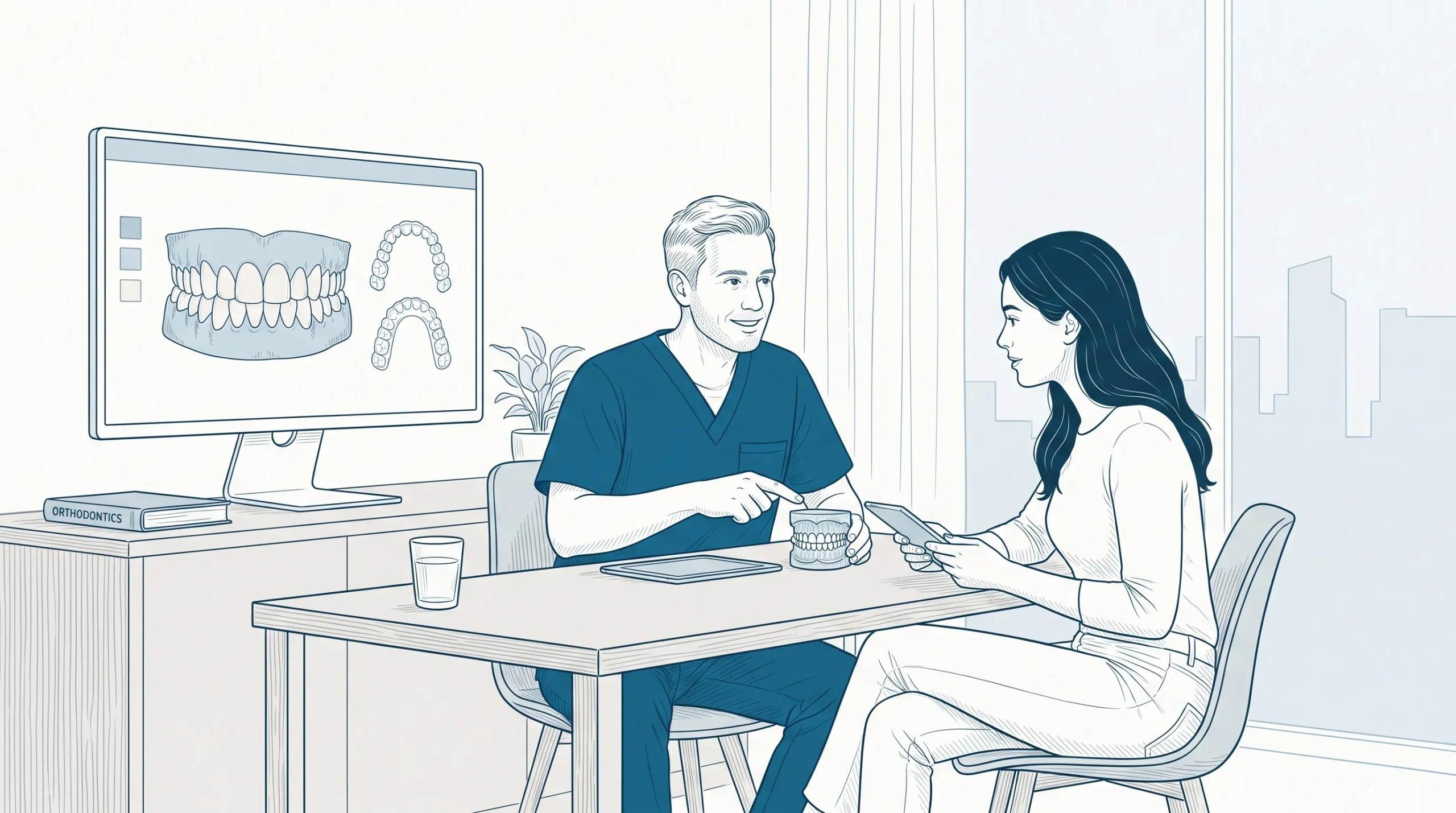
An appointment starts with what you have noticed, what you would like to understand and any symptoms you are experiencing. Your dentist will review your medical and dental history, examine your teeth and gums and assess how your teeth meet.
Photographs, scans, impressions or X-rays may be recommended where clinically needed. Not every person needs every investigation. If the tooth movement or bite concern is complex, referral to an orthodontist, a registered dental specialist, may be appropriate.
Before agreeing to treatment, useful questions include:
- What concern does each proposed procedure address?
- What are the alternatives, including leaving things as they are?
- Would treatment remove healthy tooth structure?
- What are the likely risks, time commitments and maintenance needs?
- What is included in the estimate, and what future costs might arise?
A consultation about cosmetic dentistry and orthodontics should leave you understanding the choices, not feeling committed to a particular procedure. Ask for an explanation of the proposed sequence and an itemised estimate before deciding.
If you have toothache, swelling, a recent injury or a tooth that has changed colour unexpectedly, mention this when arranging your appointment. These concerns need clinical assessment rather than being treated as purely cosmetic.
Frequently asked questions
Can veneers replace braces? Veneers can change the visible shape of teeth, but they do not move teeth or correct the underlying bite. They may also require enamel removal. Whether they are appropriate depends on an examination and discussion of alternatives.
Do I need to straighten my teeth before whitening? Not necessarily. Whitening and tooth movement address different concerns. Your dentist can explain whether the timing matters for your proposed treatment, particularly if bonding or other restorations are also being considered.
Can adults have orthodontic treatment? Adults can be assessed for treatment. Gum health, the support around the teeth, existing restorations and the movements required matter more than age alone. Suitability and treatment experiences vary.
Does considering cosmetic dentistry and orthodontics mean I need both? No. An assessment may identify one suitable approach, several reasonable options or no need for treatment. You can choose to address only the concern that matters to you, provided the proposed care is clinically appropriate.
Can I choose not to change healthy teeth? Yes. Normal differences in colour, shape and alignment do not automatically require treatment. Your dentist can explain whether there is a health or functional concern separate from appearance.
Discuss your options with Bright Smiles
Bright Smiles sees patients at both its Brightwater and Currimundi locations on the Sunshine Coast. If you would like to understand whether tooth movement, an appearance-focused treatment or neither may suit your circumstances, you can arrange an assessment with the team.
An examination can help clarify your concerns and the potential benefits, risks and alternatives before you decide whether to proceed.