

For older adults, healthy oral care means brushing with fluoride toothpaste twice a day, cleaning between teeth daily and adapting the routine when medicines, dentures or reduced hand strength make care harder. Getting older does not mean you have to lose your teeth. The aim is to protect the teeth you have, keep your mouth comfortable and get advice when something changes.
This guide focuses on practical adjustments you can make at home, along with signs that need professional assessment. The most suitable routine will depend on your oral health, medical history and how easily you can manage daily cleaning.
Why oral care needs can change with age
Some changes become more common in later life, but they are not inevitable. Gums may recede, exposing tooth roots that are more vulnerable to decay. Existing fillings, crowns and bridges still need careful cleaning around their edges.
Medicines and some health conditions can reduce saliva, leaving the mouth dry. Saliva helps protect teeth and makes chewing, swallowing and speaking more comfortable. Arthritis, reduced vision or memory changes can also make familiar tasks harder.
These challenges call for adjustments rather than more forceful brushing or extra products. A dentist can help identify which areas need attention and suggest a manageable approach. If your health or medicines have changed, mention this at your next appointment, even if your teeth feel comfortable.
Build a healthy oral care routine around the basics
Brush twice daily for about two minutes using a soft toothbrush and fluoride toothpaste. Fluoride helps protect teeth against decay. Brush gently along the gumline and across the outer, inner and chewing surfaces of each tooth.
After brushing, spit out the excess toothpaste rather than rinsing straight away. This leaves fluoride in contact with your teeth for longer. The Australian Dental Association’s oral health information provides guidance on everyday brushing and cleaning habits.
Clean between your teeth once a day, because a toothbrush cannot reach all those spaces. Floss can suit tight contacts, while interdental brushes, small brushes designed to clean between teeth, may be useful for wider gaps. The correct size matters: the brush should fit without being forced.
Bridges and other dental work may need a different cleaning technique. Ask your dentist to demonstrate it rather than trying to work it out around an unfamiliar restoration.
You do not need to add every oral hygiene product on the shelf. Mouthwash does not replace brushing or cleaning between teeth. If your dentist recommends one, ask what it is intended to do and when to use it.
Make cleaning easier when grip or vision changes
Reduced hand strength does not have to mean abandoning healthy oral care. An electric toothbrush may make brushing more manageable, although you still need to guide it carefully over each surface.
Small equipment changes can also help:
| What makes cleaning difficult | An adjustment to discuss |
|---|---|
| Holding a narrow toothbrush handle | A brush with a larger handle or a suitable grip aid |
| Managing string floss | A floss holder or an appropriately sized interdental brush |
| Seeing the back teeth clearly | Better lighting and a stable, well-positioned mirror |
| Remembering whether brushing is done | A simple checklist or a consistent morning and evening cue |
Choose changes that address the actual difficulty, rather than buying several new products at once. A dentist or occupational therapist may be able to suggest suitable aids.
If someone assists with brushing, agree on how much help is wanted. Explain what you are doing and take breaks when needed. Do not force a toothbrush into the mouth. For ongoing difficulty, ask a dental professional to demonstrate a safe, comfortable approach.
Address dry mouth rather than just putting up with it
A persistently dry mouth can make healthy oral care more challenging because reduced saliva increases the risk of decay. It can also affect eating, denture comfort and sleep.
Dry mouth is not simply something everyone should expect with age. Many medicines can contribute, including some used for blood pressure, allergies or mental health conditions. Healthdirect’s information on dry mouth explains possible causes and when to seek advice.
Sip water regularly, within any fluid limits recommended by your medical team. Sugar-free chewing gum may help stimulate saliva if you can chew and swallow safely. Avoid repeatedly using sugary sweets or acidic drinks to relieve dryness, as frequent exposure can harm teeth.
A dentist can assess your mouth and discuss whether saliva substitutes or additional fluoride protection may be appropriate. These options should be selected for your individual needs, not added automatically.
Tell your GP or pharmacist if dryness began after a medicine changed. Do not stop or alter prescribed medicines yourself. A medication review may identify an alternative or another way to manage the symptom.
If dryness comes with difficulty swallowing, ongoing mouth soreness or unexplained changes in your health, arrange an assessment rather than relying only on home measures.
Care for dentures and the mouth underneath them
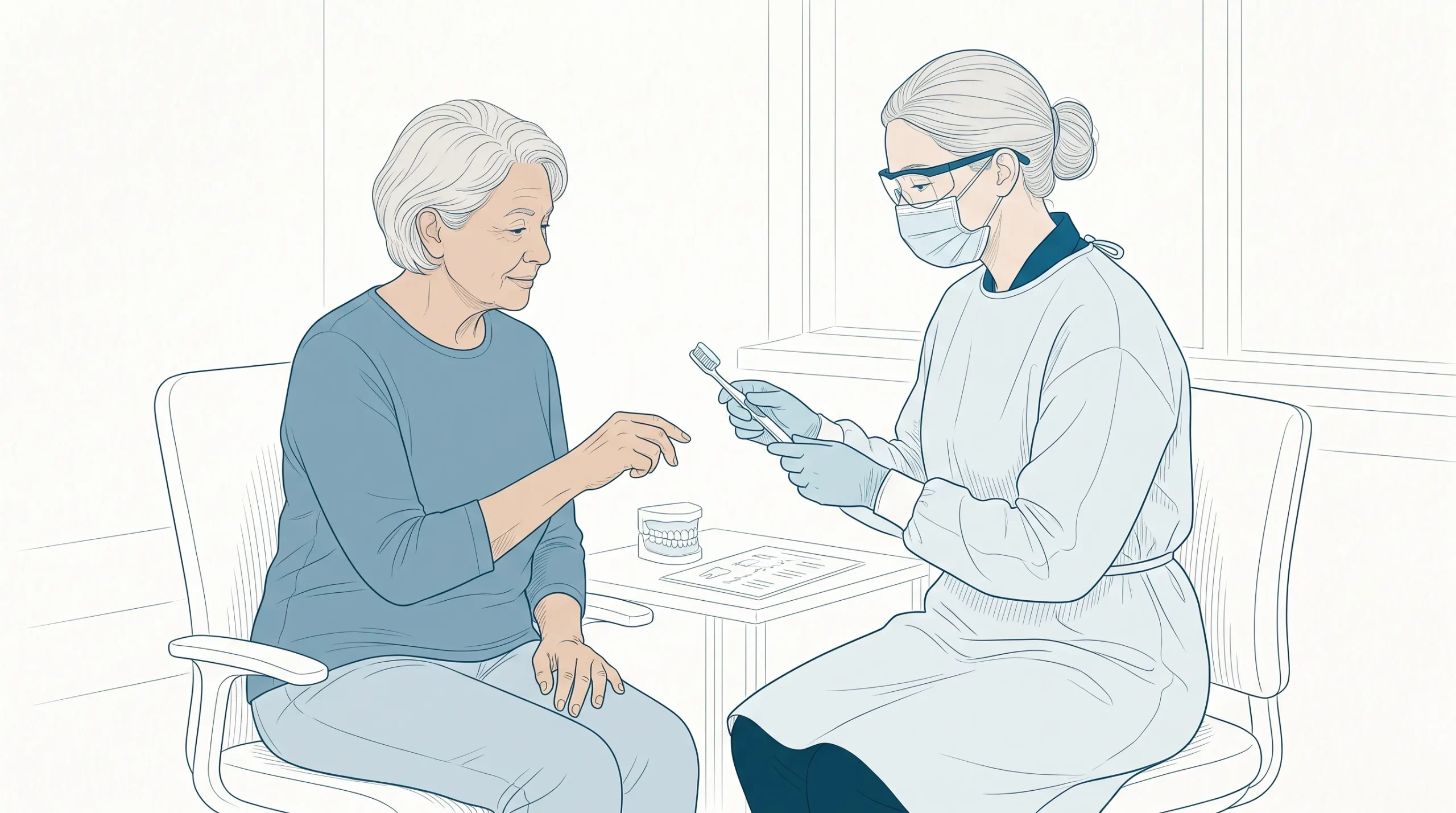
Dentures need daily cleaning, and healthy oral care also includes the gums, tongue and any remaining natural teeth. Plaque and food can collect on dentures even when they look reasonably clean.
Remove dentures for cleaning and use a denture brush or soft brush with a cleaning product suitable for the material. Ordinary toothpaste can be abrasive on denture surfaces. Clean them over a folded towel or a basin containing water to reduce the chance of breakage if they slip.
Avoid hot water, which can distort dentures. Follow the instructions for any soaking product, especially with partial dentures containing metal. Do not use household bleach unless your dental professional has specifically advised an appropriate method for your denture.
Dentures are generally removed overnight to give the supporting tissues a rest, unless your dentist has advised otherwise. Ask how to store them when they are out of your mouth, as material and manufacturer instructions can differ.
Gently clean your tongue and gums, and brush any remaining teeth with fluoride toothpaste. If a denture rubs, feels loose or changes how you chew, arrange a review. Adhesive is not a substitute for assessing a poorly fitting denture, and you should not attempt to adjust it yourself.
Choose food and drinks that support a comfortable mouth
How often teeth are exposed to sugar matters as well as the amount. Frequent sweet snacks, sweetened tea or coffee and sipping sugary drinks throughout the day can increase decay risk. Water is a useful everyday choice when your medical advice allows it.
Aim for balanced meals that meet your nutritional needs. If chewing is difficult, softer nutritious options may be easier, but an ongoing problem deserves assessment. Avoid assuming that discomfort or an ill-fitting denture means you must permanently give up foods you enjoy.
People who need nutritional supplements, modified textures or frequent meals for medical reasons should not restrict these without advice. A dentist and dietitian can help balance oral health with nutrition. Swallowing difficulties may also need assessment by your medical team or a speech pathologist.
For healthy oral care, the goal is a workable eating pattern, not a rigid set of food rules. Persistent chewing pain, reduced food intake or unintended weight loss should be discussed with a health professional.
Keep daily care steady through retirement and changing routines
Retirement, moving home or taking on caring responsibilities can remove the cues that once prompted brushing. Linking dental care to regular activities, such as getting dressed and preparing for bed, can make the routine easier to maintain.
Keep cleaning supplies together and within comfortable reach. If remembering tasks has become difficult, a written checklist or agreed reminder from a support person may help. Our guide to creating an oral hygiene care plan at home explains how to organise a simple routine.
Mood and motivation can change too. This resource on emotional adjustments around ageing and retirement discusses changes in routine, social connection and wellbeing. If low mood, anxiety or memory concerns are affecting everyday care, speak with your GP.
Keeping healthy oral care manageable may mean using fewer steps, adapted tools or some assistance. A routine you can sustain is more useful than an elaborate one that feels overwhelming.
Make dental appointments relevant to your circumstances
There is no single check-up interval that suits every older adult. Your dentist can recommend timing based on factors such as decay risk, gum health, dry mouth, dentures and your ability to clean at home.
An appointment may include checking teeth, existing restorations, gums and the soft tissues inside your mouth. If you wear dentures, their fit and the tissues beneath them can be assessed. X-rays may be recommended when clinically indicated, rather than automatically at every visit.
To make the discussion useful, bring or explain:
- Your current medicines, including supplements and recent changes.
- Relevant medical conditions, allergies or treatment updates.
- Any pain, dryness, bleeding, chewing difficulties or mouth changes.
- The parts of daily cleaning you find difficult and any assistance you receive.
Tell the team if anxiety, mobility, hearing or communication needs affect appointments. You can also ask for explanations, breaks or time to consider any proposed treatment.
Professional assessment complements healthy oral care at home; it does not replace it. Our article on how oral health and dental care are connected explains the different roles of daily cleaning and dental review.
Know which changes need dental advice
Arrange a dental assessment for persistent bleeding gums, new sensitivity, tooth pain, loose teeth or dentures that rub. These symptoms have different possible causes and cannot be diagnosed from a home-care checklist.
A mouth ulcer, red or white patch or lump that persists for more than two weeks should also be assessed, even if it is not painful. Mention any unexplained difficulty chewing or swallowing.
Seek prompt dental advice for facial swelling, significant pain or signs of infection. Call 000 if swelling is affecting breathing or swallowing.
Do not assume a symptom is just part of getting older. Equally, a change does not automatically mean you need extensive treatment. An examination can establish the cause and help you understand appropriate options, including their benefits, limitations and potential risks.
Frequently asked questions
Is losing teeth a normal part of ageing? Tooth loss is not inevitable with age. Decay, gum disease and other conditions can affect teeth, but healthy oral care and appropriate professional assessment can help you manage those risks. Existing problems still need individual advice.
Do I need dental checks if I have no natural teeth? Yes, dental review can still be appropriate. A dentist can assess denture fit, the tissues underneath and other changes in the mouth. The interval should reflect your needs rather than a fixed schedule for everyone.
Should I stop brushing an area that bleeds? Avoid scrubbing harder or abandoning cleaning altogether. Use a soft brush gently and arrange an assessment if bleeding persists or keeps returning. Gum inflammation is one possible cause, but medicines and other factors may also be involved.
Is mouthwash enough when brushing is difficult? No. Mouthwash does not remove plaque as effectively as physical cleaning. Ask about adapted brushes, interdental aids or assistance if brushing has become difficult.
Discuss a routine that suits your needs
If dry mouth, dentures or changes in hand strength are making daily care difficult, a dental assessment can help identify practical adjustments. Recommendations will depend on your oral health and circumstances.
To discuss your concerns, you can book an appointment with Bright Smiles. The team sees patients at both the Brightwater and Currimundi locations on the Sunshine Coast.