

If you are searching for Medicare dental benefits for seniors, the short answer is that Medicare usually does not cover routine dental care for older adults in Australia. Check-ups, cleans, fillings, dentures, crowns and most other dental treatments are generally paid for privately, through eligible public dental services, through some Department of Veterans' Affairs arrangements or with help from private health insurance extras cover.
That can feel confusing, especially because Medicare is central to many other parts of healthcare. Dental care is treated differently in Australia, so it helps to separate what Medicare may cover from other support options that may be available to seniors on the Sunshine Coast.
What Medicare dental benefits for seniors means in Australia
Medicare helps with many medical services, but adult dental care is mostly outside the Medicare system. Services Australia states that Medicare generally does not cover most dental services, although there are specific dental programs and arrangements for some eligible groups.
For seniors, Medicare dental benefits for seniors is not the name of a broad national program for routine adult dental treatment. The phrase is often used online because people are trying to find out whether a pension, Seniors Card, Medicare card or concession card changes their dental costs.
In most cases, having a Medicare card alone does not mean dental treatment can be bulk billed. Bulk billing is common in medical settings, but it does not automatically apply to dentistry. A dental clinic may offer estimates, private health claiming or payment options, but this is separate from standard Medicare benefits.
There are still a few pathways worth checking. Some seniors may be eligible for public dental care through Queensland Health, DVA dental support or private health insurance rebates. Each has its own rules, waiting periods and limits.
What routine dental care Medicare usually does not cover
For most older adults, Medicare dental benefits for seniors will not cover routine appointments at a private dental practice. This commonly includes preventive care, restorative care and replacement tooth options.
Examples of dental services that are usually not covered by Medicare include:
- Routine dental examinations
- Scale and clean appointments
- Dental X-rays taken in a private dental setting
- Fillings for tooth decay
- Tooth extractions in most private dental settings
- Dentures, denture repairs and relines
- Crowns, bridges and dental implants
- Gum disease treatment
- Cosmetic treatments such as whitening or veneers
This does not mean these treatments are unnecessary or optional for every person. It simply means the funding pathway is usually not Medicare. A dentist can examine your mouth, explain whether treatment may be recommended and provide information about fees before you decide how to proceed.
When Medicare, public dental care or other programs may help
Searches for Medicare dental benefits for seniors often lead to several different funding pathways being grouped together. The most relevant options depend on your age, concession status, veteran status, medical situation and the type of dental care needed.
Queensland public dental services
In Queensland, eligible adults may be able to access public dental services through Queensland Health. Eligibility may include holding certain concession cards, such as a Pensioner Concession Card, Health Care Card or Commonwealth Seniors Health Card. Waiting times, emergency triage and available services can vary.
Queensland Health provides information about public dental services in Queensland, including who may be eligible and how public oral health services are accessed. This can be a useful starting point if cost is a major concern and you hold a relevant card.
Public dental care is not the same as Medicare-funded private dental care. It is a separate public health service. If you are in pain, have swelling, facial trauma, uncontrolled bleeding or signs of infection, seek prompt dental or medical advice rather than waiting for a routine appointment.
Hospital or medically necessary care
Some oral surgery or dental-related care may occur in a hospital or medical setting. In these situations, Medicare may contribute to certain medical components, such as some specialist, anaesthetic or hospital-related items, depending on the circumstances and item numbers involved.
This does not mean the dental treatment itself is automatically covered. There may still be dentist, surgeon, anaesthetist, hospital or prosthetic costs. If you are referred for hospital-based care, ask for a written estimate and clarify which parts may attract Medicare or private health rebates.
Department of Veterans' Affairs arrangements
Some veterans and eligible dependants may have access to dental care through Department of Veterans' Affairs arrangements. The level of cover can depend on the type of card held and whether the treatment is accepted under DVA rules.
If this may apply to you, check your DVA entitlements before booking. The dental practice can also advise what information it needs to process a claim, but eligibility is determined by DVA, not by the clinic.
Comparing senior dental cost support options
For Sunshine Coast patients, Medicare dental benefits for seniors may be relevant only in limited situations, so it is worth comparing the broader options before delaying care. The table below gives a general overview, not a promise of eligibility or rebate amounts.
| Option | Who it may help | What to check before treatment |
|---|---|---|
| Medicare | Usually limited for routine adult dental care | Whether any hospital or medical item numbers apply in your specific case |
| Queensland public dental services | Eligible concession card holders and other priority groups | Eligibility, waiting times, emergency access and available treatment |
| DVA dental arrangements | Eligible veterans and dependants | Card type, treatment approval rules and provider requirements |
| Private health insurance extras | People with dental extras cover | Annual limits, waiting periods, item numbers and out-of-pocket costs |
| Payment plans | People who prefer to spread private treatment costs | Fees, repayment terms, approvals, exclusions and whether the plan suits your budget |
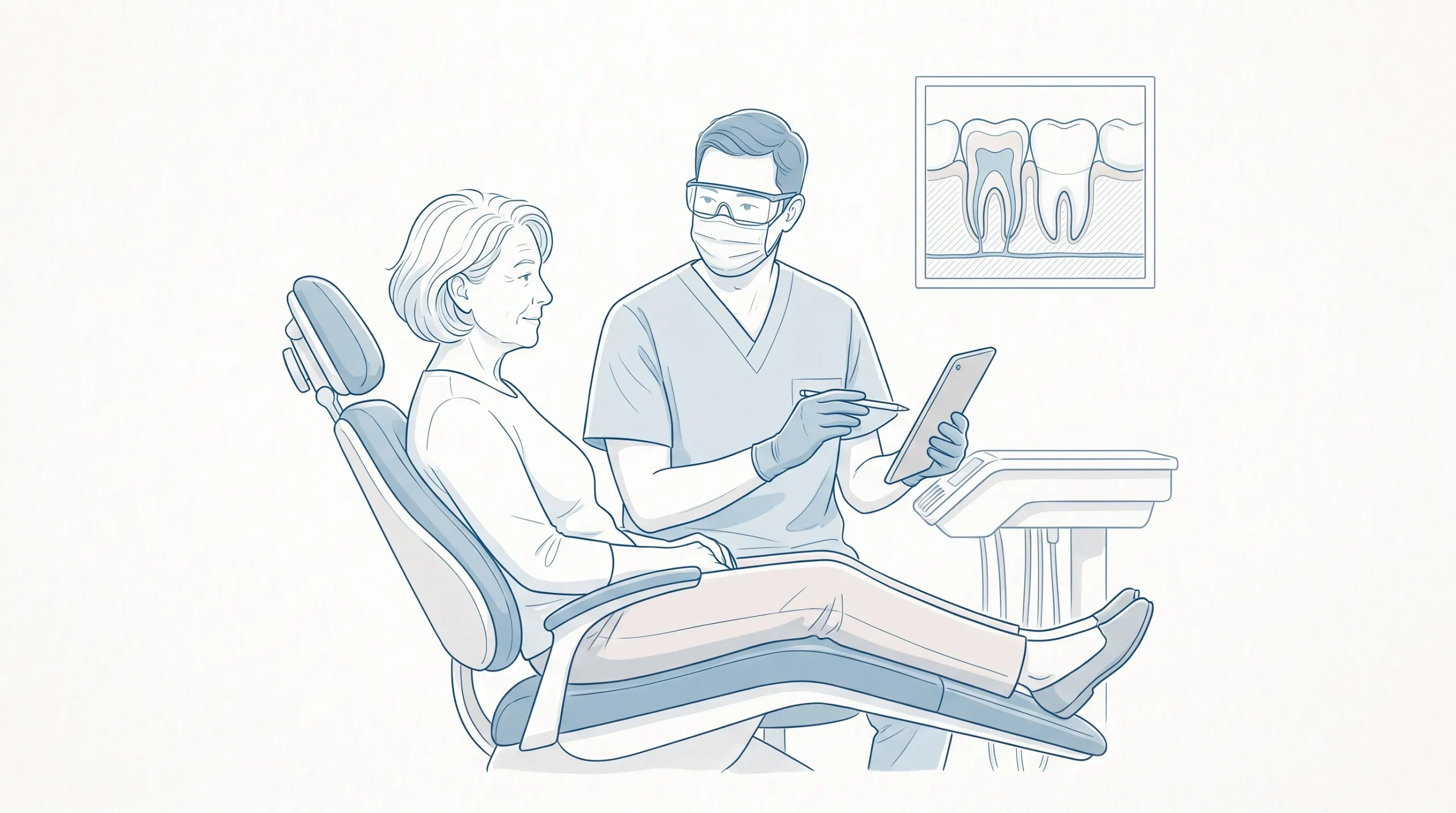
Private health insurance, payment plans and budgeting
If Medicare dental benefits for seniors are not available for your planned care, private health insurance extras cover may reduce some out-of-pocket costs. Extras policies vary widely. Some cover general dental only, while others may include major dental with different limits and waiting periods.
Before treatment, it can help to ask your health fund about the specific item numbers on your treatment estimate. That gives you a clearer idea of the rebate and the remaining amount you may need to pay. If you are comparing policies, Bright Smiles has a patient-friendly guide on how dental health insurance may help with treatment costs.
Payment plans may also be an option for some patients, depending on the treatment and finance terms. They do not reduce the cost of treatment, but they may make planned care easier to budget for. It is sensible to read the terms carefully, including any fees, repayment schedule and approval requirements. You can read more about how a teeth payment plan may help you budget for care.
For larger treatment plans, such as dentures, crowns or staged restorative work, ask your dentist whether treatment can be prioritised. Sometimes urgent disease control is addressed first, while elective or longer-term options are considered later. Suitability depends on your oral health, medical history and treatment goals.
Dental issues that become more common later in life
Understanding Medicare dental benefits for seniors is only one part of planning care. Older adults can experience changes that affect teeth, gums, saliva, dentures and comfort when chewing.
Common issues that may be discussed at a dental appointment include dry mouth, root decay, gum disease, cracked or worn teeth, loose dentures, tooth sensitivity and difficulty cleaning around existing dental work. Some medicines can contribute to dry mouth, which may increase the risk of decay. Medical conditions such as diabetes can also affect oral health and healing.
A regular dental examination can help identify concerns before they become more complex. Your dentist may check your teeth, gums, bite, soft tissues and any dentures or restorations. They may also ask about medicines, previous dental treatment and any symptoms such as bleeding gums, toothache or changes in chewing.
If you would like broader prevention advice, Bright Smiles has written about dental care tips for each stage of adult life, including later adulthood.
When mouth, jaw, headache and neck symptoms overlap
Some seniors seek dental care because of jaw discomfort, headaches, tooth grinding or pain that seems to move between the mouth, face and neck. Dental causes may include tooth infection, cracked teeth, gum problems, denture issues, clenching or temporomandibular joint concerns. Other medical or musculoskeletal factors can also contribute.
A dentist can assess whether there are oral health factors involved, but not every headache or neck symptom is dental in origin. Depending on your symptoms, your GP, physiotherapist or another appropriately qualified practitioner may need to be involved. For a non-dental example of how posture-focused providers explain neck assessment and care, this overview of structural neck correction and posture care may help show how neck-related symptoms can be approached outside dentistry.
Seek prompt medical or dental advice if pain is severe, follows an injury, is associated with swelling or fever, affects swallowing or breathing or is accompanied by other concerning symptoms.
What to ask before starting dental treatment
Because Medicare dental benefits for seniors are limited, clear cost discussions are important. You are entitled to understand your options before agreeing to treatment.
Useful questions include:
- What is the diagnosis or likely cause of the problem?
- What treatment options may be suitable, including doing nothing for now if that is clinically reasonable?
- What are the potential benefits, risks and limitations of each option?
- Is the treatment urgent or can it be staged?
- What are the estimated fees and item numbers?
- Could private health insurance, DVA or a payment plan apply?
- What ongoing maintenance may be needed?
Dental decisions are personal. Some people prioritise comfort and function, while others also want to consider appearance, convenience or longer-term maintenance. Your dentist can explain options, but the decision should be based on your circumstances and informed consent.
Frequently Asked Questions
Does Medicare cover dental check-ups for seniors? Usually, no. Medicare generally does not cover routine private dental check-ups, cleans or fillings for seniors. Some eligible people may access public dental services or other funding pathways, but these are separate from standard Medicare benefits.
Are Medicare dental benefits for seniors available for dentures? In most private dental settings, Medicare does not usually cover dentures. Eligible concession card holders may be able to ask Queensland Health about public dental options, and some private health insurance extras policies may provide a rebate depending on the policy.
Can seniors bulk bill dental treatment through Medicare? A Medicare card alone usually does not allow adult dental treatment to be bulk billed. Bulk billing may apply to some eligible children under the Child Dental Benefits Schedule, which is different from seniors' dental care. Bright Smiles has separate information about when Medicare may help with children's dental care.
What if I have a Pensioner Concession Card or Commonwealth Seniors Health Card? These cards may help you meet eligibility criteria for Queensland public dental services, but they do not automatically make private dental treatment Medicare-covered. Check the current Queensland Health rules and ask about waiting times or emergency access if you have symptoms.
Should I delay dental care if I cannot get Medicare cover? It is better to seek advice before a dental problem becomes more difficult to manage. An examination can help identify the cause, explain whether treatment is urgent and outline options that may suit your health needs and budget.
Discussing dental care costs with Bright Smiles
Medicare does not usually cover routine dental care for seniors, but you may still have options. A dental examination can help determine what is happening, whether treatment may be recommended and what costs, rebates or staged care options may apply.
To discuss your concerns, you can book an appointment with the team at Bright Smiles at either the Brightwater or Currimundi location. Please bring any concession cards, DVA details, private health insurance information and a list of current medicines so the team can give you more accurate guidance for your circumstances.