

Preparing a child for their first dental visit is less about a big event and more about small, familiar steps. Good kiddie dental care starts with helping your child understand that the dentist is a normal part of looking after their body, like seeing a GP, getting their eyes checked or learning how to brush properly.
For many families, the first visit is short and gentle. The dentist may look at your child’s teeth and gums, talk with you about brushing and diet, answer questions about habits such as thumb sucking or dummies, and check whether anything needs closer attention. A clinical assessment is still important, even if your child has no symptoms, because baby teeth play a role in eating, speaking and making space for adult teeth.
When should a child have their first dental visit?
The Australian Dental Association’s patient resource Teeth.org.au recommends a first dental visit when the first tooth appears or by around 12 months of age, whichever comes first. That may sound early, but it gives parents practical advice before problems develop and helps children become familiar with dental care from a young age.
If your child is older and has not had a dental visit yet, there is no need to feel embarrassed. Many children start later for all sorts of reasons. The useful next step is to arrange a check-up and keep the experience calm and matter-of-fact.
A first visit may be recommended sooner if you notice pain, swelling, trauma, dark marks on teeth, difficulty eating, bleeding gums or a change in how your child bites. These signs do not always mean something serious, but they are worth having assessed by a dentist.
Kiddie dental care starts before the appointment
Children often feel more comfortable when they know roughly what to expect. You do not need a long explanation. In fact, too much detail can make some children more nervous. A simple description usually works best: the dentist will count your teeth, look at your smile with a small mirror and talk about how to keep your teeth strong.
Try to keep the language neutral. Avoid phrases such as it will not hurt or there is nothing to be scared of, because these can accidentally introduce worry. You can say the dentist will be gentle and that your child can ask questions or take a short break if they need one.
Helpful ways to prepare include:
- Practising opening wide while brushing at home.
- Letting your child bring a comfort item if that helps them settle.
- Reading a simple book about visiting the dentist.
- Playing dentist with a toothbrush and a mirror, without pretending to do treatment.
- Booking at a time when your child is less likely to be tired or hungry.
- Telling the dental team in advance if your child is anxious, sensitive to sounds or has additional needs.
Preparation does not need to be perfect. The aim is familiarity, not performance.
What may happen at a first dental visit?
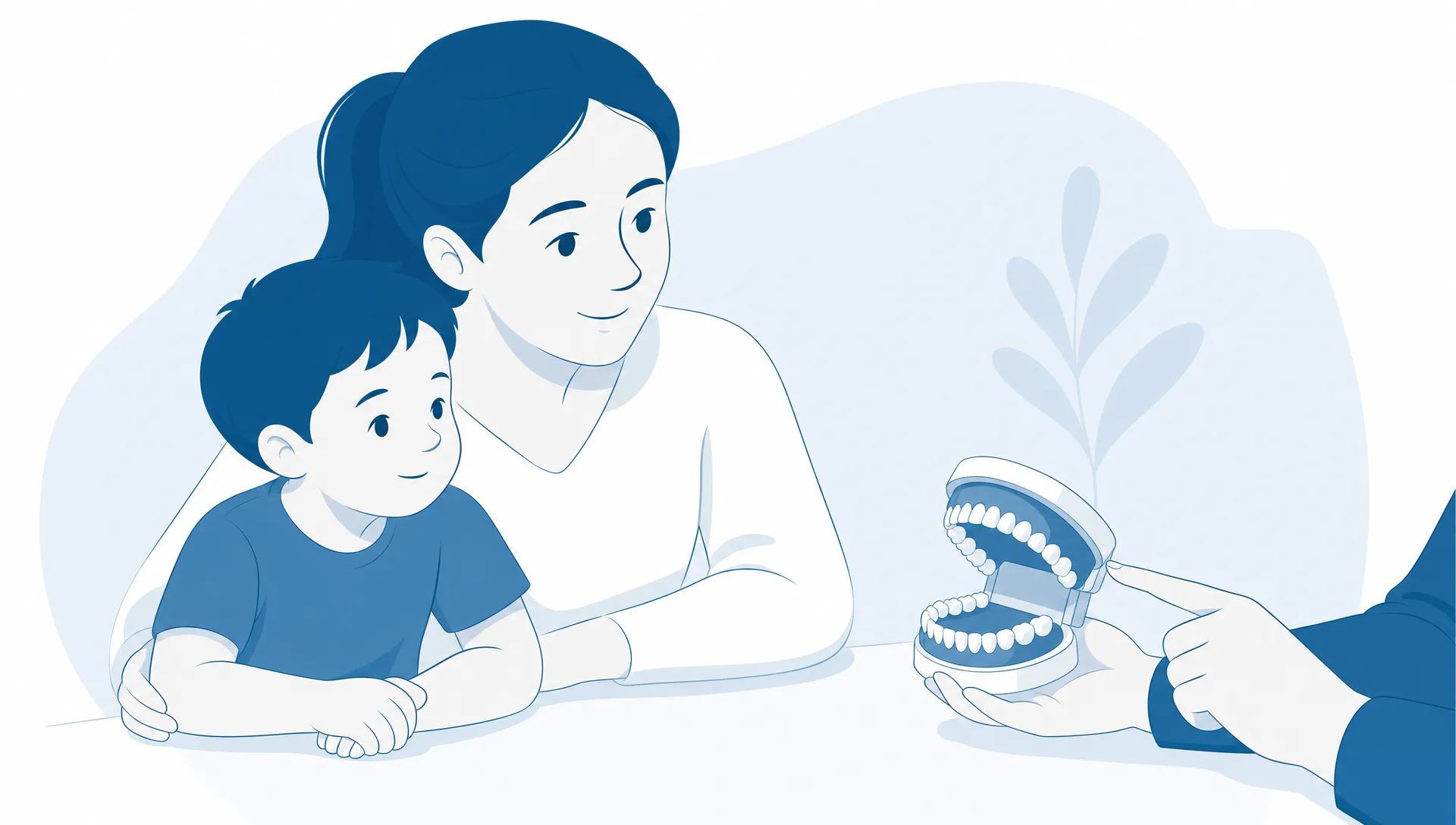
The appointment will depend on your child’s age, comfort level and oral health needs. Some children happily sit in the dental chair. Others prefer to sit on a parent’s lap. Younger children may have a brief look using a knee-to-knee or lap-to-lap position, where the parent stays close while the dentist checks the mouth.
The dentist may check the teeth, gums, jaw development and bite. They may ask about feeding, bottles, snacks, drinks, brushing, fluoride toothpaste and family dental history. If your child has a concern such as a toothache, the dentist may recommend an X-ray or further assessment, but this depends on the situation and whether it is appropriate for the child.
A first visit does not always involve a clean. For some children, the best outcome is a positive introduction, useful advice for parents and a plan for future care if needed.
| Part of the visit | What it may involve | Why it can help |
|---|---|---|
| Conversation with the parent or carer | Questions about brushing, diet, teething, habits and medical history | Helps the dentist understand your child’s risk factors and needs |
| Gentle mouth check | Looking at teeth, gums and bite with a small mirror | Allows early signs of decay, wear or gum concerns to be assessed |
| Brushing advice | Guidance on toothbrush size, toothpaste and technique | Supports home care between visits |
| Future planning | Advice on review timing or any recommended treatment | Gives parents clear next steps based on the child’s individual situation |
All dental procedures have potential benefits and risks. If treatment is recommended, your dentist should explain the reason for it, possible alternatives and what to expect so you can make an informed decision.
What to say before and after the visit
The way adults talk about the dentist can shape a child’s expectations. If a parent has had a difficult dental experience, it is understandable to feel cautious, but children do not need the details before their own appointment.
Before the visit, keep it simple: the dentist helps us look after teeth, and today they will have a look and count them. After the visit, praise cooperation rather than bravery. For example, you might say you opened your mouth so the dentist could see your teeth, or you sat with me while we checked your smile.
If your child cries or refuses to open their mouth, that does not mean the appointment has gone badly. Children communicate through behaviour, especially when something is new. A calm first exposure can still build familiarity for next time.
If your child feels nervous about the dentist
Dental anxiety is common in both children and adults. Some children are worried about unfamiliar people, new sounds, bright lights or lying back in a chair. Others pick up worry from a parent or sibling. None of this means your child is being difficult.
A gentle approach may include giving the child time to look around, explaining each step in age-appropriate language and stopping if the child is not coping. Not every appointment needs to achieve everything at once. Your dentist can assess what is appropriate based on your child’s needs, behaviour and oral health.
For parents who would like more practical ideas, Bright Smiles has a guide on ways to deal with dental anxiety that may also be useful for families preparing a child for care.
Brushing, food and drink questions to ask
A first dental visit is a good time to ask everyday questions. Parents often want to know whether they are brushing well enough, which toothpaste to use, what to do if a toddler resists brushing or how often sweet foods can fit into a child’s diet.
In Australia, general guidance is to clean baby teeth as soon as they appear. A soft, small toothbrush is usually suitable. Toothpaste advice depends on the child’s age and decay risk, so your dentist can explain what is appropriate for your child rather than giving a one-size-fits-all answer.
Food and drink habits also matter. Frequent snacking on sweet foods or sipping sugary drinks can increase the risk of tooth decay. Water is a tooth-friendly everyday drink, especially between meals. Your dentist may also ask about bottles at bedtime, dummies, thumb sucking or mouth breathing if these are relevant.
The aim is not to make parents feel judged. Family routines can be busy, and small changes that fit your household are usually more sustainable than a complicated plan.
What to bring to the appointment
You do not need much for a child’s first dental visit, but a little preparation can make the appointment smoother. Bring your child’s Medicare card if relevant, any health or medication information, details about allergies and any questions you want to ask.
If your child may be eligible for the Child Dental Benefits Schedule, it is worth checking before the appointment. Bright Smiles supports children’s bulk billing for eligible children, and you can read more about what Medicare dental benefits cover for eligible children if you would like to understand the basics before booking. Eligibility, available balance and covered services can vary, so it is sensible to confirm details with the practice.
If your child has had an injury, bring any details you remember, including when it happened, whether there was bleeding, whether a tooth changed colour and whether eating or drinking has become uncomfortable.
When a dental visit should not wait
Some dental issues in children are better assessed promptly. This does not mean panic is needed, but it does mean delaying advice may make the situation harder to manage.
Consider arranging a dental assessment if your child has:
- Toothache that does not settle.
- Facial swelling or swelling around the gum.
- A knocked, broken or loose tooth after an injury.
- A baby tooth that has turned grey or dark after trauma.
- Difficulty eating, sleeping or brushing because of mouth discomfort.
- Fever or feeling unwell with dental pain or swelling.
If your child has swelling, difficulty breathing, difficulty swallowing or seems very unwell, seek urgent medical or dental advice.
Choosing the right environment for a first visit
For Sunshine Coast families, convenience matters, but the tone of the appointment matters too. A family-focused dental team should explain things clearly, give parents time to ask questions and avoid making children feel pressured. If your child has particular needs, calling ahead can help the team plan a more comfortable appointment.
Bright Smiles sees families at Brightwater/Mountain Creek and Currimundi, which can be helpful for families across nearby Sunshine Coast communities. If your family is based outside the Sunshine Coast, the same criteria can help you choose a local practice elsewhere in Queensland, such as a Gold Coast practice like The Dental Lounge Robina.
Look for a practice that communicates in a way your child can understand, discusses options openly and explains any recommended treatment before you decide what to do.
Frequently asked questions
What age should my child first see a dentist? A first dental visit is generally recommended when the first tooth appears or by around 12 months of age. If your child is older and has not been yet, booking a check-up is still worthwhile.
What if my child cries at the appointment? Crying is common, especially for toddlers and preschool-aged children. The dentist can usually adapt the visit, keep the assessment brief if needed and focus on building familiarity for future appointments.
Should I tell my child they are going to the dentist beforehand? Yes, but keep it simple and calm. A short explanation on the day or the day before is often enough for young children. Avoid detailed descriptions that may create worry.
Will my child need treatment at the first visit? Not necessarily. Many first visits are mainly a check-up and a conversation with parents. If treatment is recommended, your dentist should explain the reason, possible benefits, risks and alternatives before you decide.
Can baby teeth get cavities? Yes. Baby teeth can develop tooth decay, and untreated decay may cause discomfort or infection. Baby teeth also help with eating, speech and guiding adult teeth into position.
Does Medicare cover children’s dental visits? Some children are eligible for the Child Dental Benefits Schedule, which can help cover certain basic dental services. Eligibility rules apply, so check your child’s eligibility and available balance before treatment.
Planning your child’s first dental visit
A positive first dental visit is not about forcing cooperation. It is about making dental care feel familiar, giving parents practical guidance and checking that your child’s teeth and gums are developing as expected.
If you are preparing for your child’s first appointment, you can book an appointment with Bright Smiles at either the Brightwater or Currimundi location. A dental examination can help assess your child’s oral health and guide the next steps based on their individual needs.