

If you are searching for a teeth whitening dentist, you are probably wondering whether whitening in a dental setting is worth it, what happens at the appointment and where the limits are. In short, dentist-supervised whitening may help lighten some stains, but it is not suitable for every person or every type of tooth discolouration.
Teeth whitening is a cosmetic dental treatment. That means the decision to proceed should be based on your oral health, your goals and a clear understanding of the possible benefits, risks and alternatives. At Bright Smiles, patients can discuss whitening and other cosmetic dental options at the Brightwater or Currimundi location, depending on what is convenient.
What teeth whitening at the dentist involves
Teeth whitening at the dentist usually involves a whitening gel that contains a peroxide-based ingredient. This ingredient helps break down certain stains within the tooth structure so the teeth may appear lighter.
The Australian Dental Association’s patient information site, Teeth.org.au, explains teeth whitening as a treatment that should be considered carefully, particularly because not all products or situations are the same.
Professional whitening may be provided as an in-chair appointment, a dentist-supervised take-home kit or a combination of both. The right approach depends on factors such as tooth shade, sensitivity, gum health, restorations, timing and personal preference.
Whitening is different from a dental clean. A scale and polish can remove plaque, calculus and some surface staining, but it does not change the internal shade of the tooth. If you are unsure which you need, this Bright Smiles article on what dental cleaning can and cannot do explains the difference in more detail.
What a teeth whitening dentist checks before treatment
A teeth whitening dentist does more than provide whitening gel. They first assess whether whitening is appropriate for your teeth and gums. This is important because whitening over active decay, cracked teeth, leaking fillings or inflamed gums can increase the chance of discomfort or an uneven result.
Your dentist may check:
- Whether stains are on the surface or deeper within the tooth
- Whether existing fillings, crowns, veneers or bonding are visible when you smile
- Whether you have current tooth sensitivity
- Whether gum health needs attention first
- Whether whitening is likely to match your goals
- Whether another cosmetic or restorative option may be more suitable
This assessment also helps set realistic expectations. Whitening can lighten natural tooth structure, but it does not whiten porcelain, composite resin or ceramic restorations. If you have a crown or filling on a front tooth, it may look darker than the surrounding teeth after whitening, even if it matched before.
The principle is familiar in other cosmetic surface work too: a professional painter in Copenhagen assesses the surface before selecting materials, and your dentist assesses teeth, gums and restorations before recommending whitening.
Benefits of teeth whitening at the dentist
One benefit of seeing a teeth whitening dentist is that the treatment starts with a dental assessment rather than a product choice. This can reduce the chance of using whitening in a situation where another issue, such as decay or gum inflammation, needs attention first.
Dentist-supervised whitening also allows the strength, application method and timing to be discussed in relation to your oral health. Some people want a faster in-chair approach, while others prefer gradual whitening at home with custom trays. Bright Smiles has a separate comparison of in-chair whitening and take-home options if you want to understand how those pathways differ.
Another benefit is guidance around sensitivity. Some people experience temporary sensitivity during or after whitening. Your dentist can discuss ways to reduce irritation, such as adjusting timing, reviewing your toothpaste or spacing treatment sessions differently. These steps do not remove all risk, but they can make the process more considered.
Professional advice may also help you avoid overuse. Repeated whitening without guidance can irritate gums, worsen sensitivity or create a result that does not suit the rest of the mouth.
| Option | What it may help with | Key limits to understand |
|---|---|---|
| Dentist-supervised whitening | Lightening natural tooth colour and managing treatment around oral health | Results vary and restorations will not whiten |
| In-chair whitening | Whitening performed during a dental appointment | May still cause temporary sensitivity and may not suit all patients |
| Take-home whitening trays | Gradual whitening under dental guidance | Requires consistent use as directed and careful fit |
| Dental cleaning | Removing plaque, calculus and some surface stains | Does not change the internal tooth shade |
| Veneers, bonding or crowns | Changing tooth shape, colour or surface in selected cases | Involves different risks, costs, preparation and maintenance |
The limits of whitening, and why they matter
A teeth whitening dentist should explain that whitening has clear limits. It may improve some yellow or brown staining, particularly stains related to food, drink, smoking history or natural ageing. It is usually less predictable for grey tones, developmental enamel changes, trauma-related discolouration or staining caused by certain medicines.
Whitening also cannot change tooth shape, alignment, gaps, worn edges or the colour of existing restorations. If your main concern is uneven tooth shape or older visible dental work, another option may be more relevant. This does not mean whitening is wrong, only that it may not address the concern you most want to change.
There are also timing considerations. Teeth can gradually darken again after whitening, especially with frequent coffee, tea, red wine or tobacco exposure. Maintenance may be discussed, but repeated whitening should be guided by your dentist rather than treated as routine self-care.
Some patients may need dental treatment before whitening can be considered. For example, untreated decay, gum disease, broken teeth or significant sensitivity may need to be managed first. Pregnant or breastfeeding patients should ask their dentist or doctor for individual advice before starting elective cosmetic treatment.
What an appointment may involve
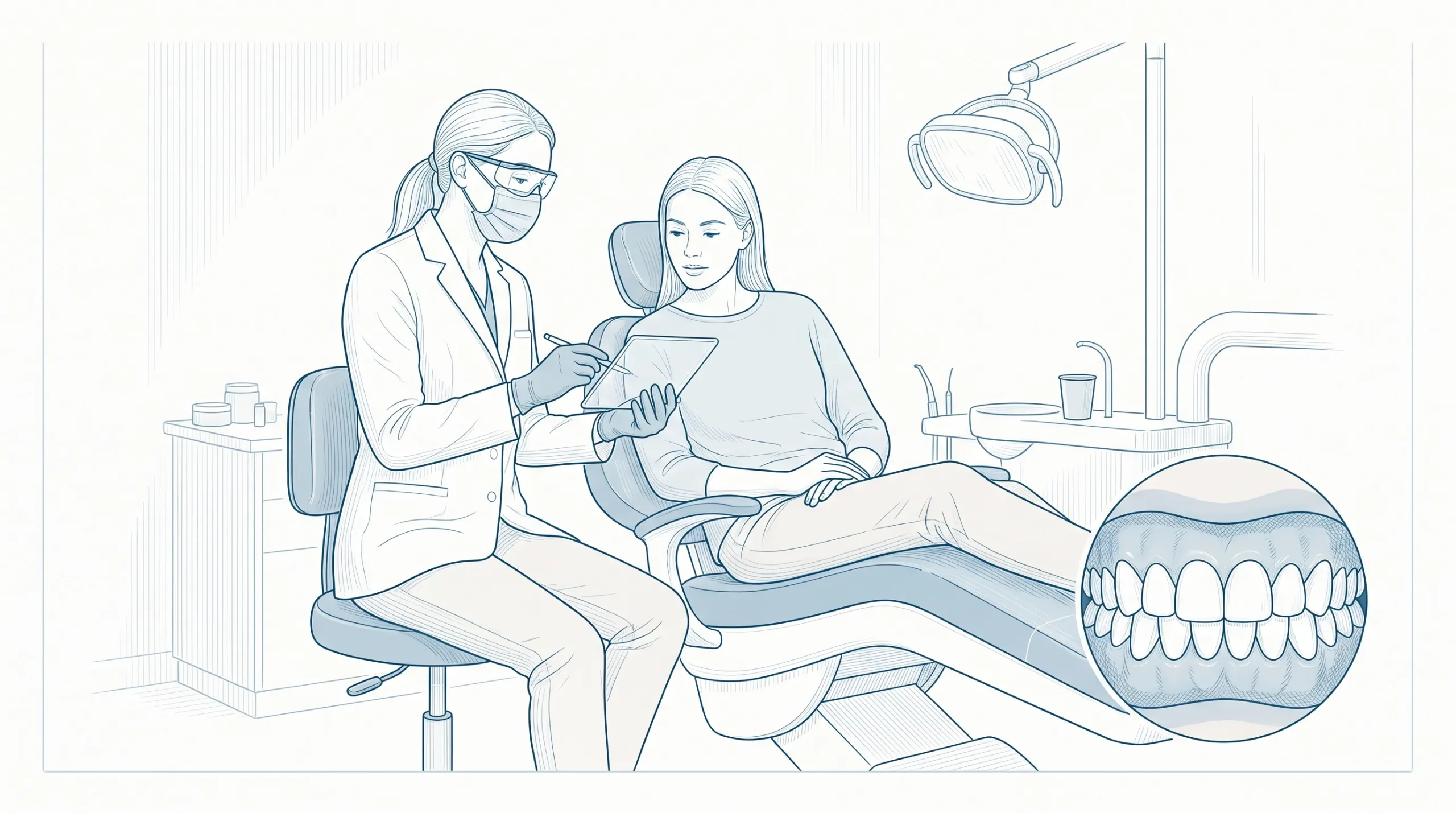
When you see a teeth whitening dentist, the appointment is usually focused on assessment, discussion and planning before any whitening begins. The exact process may vary, but it often includes a dental examination and a conversation about what you would like to change.
Your dentist may take a shade record, check your gums and teeth, review existing dental work and ask about sensitivity or medical factors that could be relevant. They may also explain the differences between in-chair whitening, take-home trays and other cosmetic options.
If whitening appears suitable, the dentist can discuss expected time frames, possible side effects, aftercare and maintenance. If whitening does not appear suitable, they can explain why and outline alternatives. For broader context, Bright Smiles has a guide on which cosmetic dental treatment may suit your needs, including whitening, bonding, veneers, crowns and orthodontic options.
The aim is not to talk every patient into whitening. It is to help you understand whether whitening is likely to address your concern, and whether any oral health issues should be managed first.
Possible risks and side effects
All dental procedures carry potential risks and benefits. Teeth whitening is generally considered a common cosmetic dental procedure, but it can still cause unwanted effects in some people.
Possible issues include temporary tooth sensitivity, gum irritation, uneven whitening, irritation from poorly fitting trays and disappointment if the result does not match expectations. Whitening products should not be swallowed or overused, and they should be kept away from children.
A teeth whitening dentist can explain these risks in relation to your own mouth. For example, someone with gum recession or exposed tooth roots may have a different sensitivity risk compared with someone who has no existing sensitivity. Someone with visible front fillings may need a different plan because those materials will not lighten like natural enamel.
If you develop strong or persistent sensitivity, gum soreness or other unexpected symptoms after whitening, contact your dentist for advice rather than continuing treatment.
How to decide if whitening is worth considering
Whitening may be worth discussing if your teeth are healthy, your main concern is colour and you understand that results vary. It may be less suitable if your concern is tooth shape, crowding, old restorations or a single dark tooth that may need investigation.
Before choosing whitening, ask practical questions such as:
- What type of staining do I have?
- Are my teeth and gums healthy enough for whitening?
- Will my fillings, crowns or veneers look different afterwards?
- What side effects should I watch for?
- How should I maintain the result without over-whitening?
These questions help turn whitening from a product decision into a dental care decision. That distinction matters, because cosmetic treatment still needs to be planned around oral health.
Frequently asked questions
Is a teeth whitening dentist different from buying a whitening kit? A teeth whitening dentist can assess your teeth and gums before recommending an option, while retail products are not tailored to your oral health. Store-bought products may also have different strengths, tray fit and instructions. Suitability still depends on your individual situation.
Will whitening work on crowns, veneers or fillings? No. Whitening gels are designed to lighten natural tooth structure. They do not whiten porcelain, ceramic or composite resin restorations. If you have visible restorations, your dentist can explain whether they may look different after whitening.
Can teeth whitening cause sensitivity? Yes, some people experience temporary sensitivity during or after whitening. The risk can depend on your oral health, existing sensitivity, gum recession, product use and treatment timing. Your dentist can discuss ways to manage this risk, but it cannot be ruled out for every patient.
How long does teeth whitening last? The length of time varies. Diet, smoking, oral hygiene, natural tooth colour and maintenance habits can all influence how long the teeth appear lighter. Whitening is not permanent and should not be repeated too often without dental advice.
Do I need a clean before whitening? Some patients benefit from having plaque, calculus or surface stains removed before whitening is considered. A dental examination can help determine whether a clean, oral health treatment or whitening discussion is most appropriate.
Discussing whitening with Bright Smiles
If you are considering whitening, a dental examination can help determine whether it may be suitable and what limitations apply to your teeth. A teeth whitening dentist can also explain alternatives if whitening is unlikely to address your main concern.
To discuss your options, you can book an appointment with Bright Smiles at either the Brightwater or Currimundi location. The team can assess your oral health, explain potential benefits and risks and help you make an informed decision based on your circumstances.