

If you are comparing in chair whitening with take-home options, the main difference is timing and supervision. In-chair whitening is completed during a dental appointment using professional whitening gel, while take-home whitening usually uses custom trays and a lower-strength gel over several days or weeks.
Both options may lighten natural tooth enamel. Neither option changes the colour of crowns, veneers, fillings or dentures. Suitability depends on your oral health, sensitivity, existing dental work, the type of staining and your expectations.
For many people, the right choice is not simply the fastest one. It is the option that suits their teeth, lifestyle and dental history.
How in chair whitening compares with take-home whitening
In-chair whitening is often considered when someone wants a more noticeable shade change within a shorter time frame. Take-home whitening may suit people who prefer gradual whitening, want more control over timing or may benefit from spreading treatment out.
Your dentist can assess whether either option may be suitable. This assessment matters because tooth discolouration can have different causes. Surface stains from coffee, tea, red wine or smoking may respond differently from deeper discolouration, ageing changes, enamel defects or staining related to trauma or medication.
| Comparison point | In-chair whitening | Take-home whitening |
|---|---|---|
| Where it happens | In the dental chair during an appointment | At home using trays or other whitening products |
| Typical time frame | Usually completed in one visit, depending on the system used | Usually completed over days or weeks |
| Supervision | Applied or monitored by the dental team | Dentist-provided options include instructions and review advice |
| Strength of gel | Often a higher-strength whitening gel used under professional supervision | Usually a lower-strength gel used for shorter daily periods |
| Control over pace | Less gradual because treatment is condensed | More gradual, with the ability to pause if sensitivity occurs |
| Maintenance | May need future top-ups depending on habits and staining | Custom trays may be useful for future top-ups if suitable |
| Main limitation | Can still cause sensitivity and results vary | Requires consistent use and careful following of instructions |
In-chair whitening and take-home whitening are not competing solutions for every person. They are different approaches to the same goal: lightening natural tooth structure in a way that is appropriate for the individual.
What should happen before teeth whitening?
Before whitening, a dental examination is usually recommended. This helps your dentist check whether staining is external, internal or related to a dental condition that needs attention first.
For example, whitening over untreated decay, cracked teeth, gum irritation or exposed root surfaces may increase discomfort or lead to disappointing results. If plaque and calculus are present, a professional clean may be recommended before whitening so the gel can contact the tooth surface more evenly.
This is also where general dentistry and cosmetic dentistry overlap. Whitening is cosmetic in purpose, but the teeth and gums still need to be assessed from a health perspective first. Bright Smiles has a helpful article on how cosmetic and general dentistry can work together if you would like more context on why this matters.
Your dentist may also discuss whether your existing restorations will affect the final appearance. A front tooth filling, crown or veneer will not whiten with the surrounding enamel, so it may look darker or more noticeable after the natural teeth are lightened. In some cases, patients choose to whiten first and then discuss whether any visible restorations should be reviewed. This depends on the individual situation.
What does in-chair whitening involve?
The exact process can vary depending on the whitening system used, but an in-chair whitening appointment generally includes a structured sequence of steps.
- Shade discussion and dental check: Your dentist or dental team member may record your starting shade and discuss what whitening can and cannot change.
- Protection for soft tissues: The lips, cheeks and gums are protected to reduce gel contact with soft tissues.
- Application of whitening gel: A professional whitening gel is applied to the teeth being treated.
- Timed whitening cycles: The gel may be left in place for set periods, then removed and reapplied according to the system instructions.
- Rinse and review: The teeth are cleaned, the shade may be reviewed and aftercare instructions are provided.
Some systems use a light as part of the appointment and others do not. The light itself is not the main whitening agent. The whitening effect comes from peroxide-based gel breaking down stain molecules within the tooth structure.
In-chair whitening may be appealing if you prefer treatment to be completed under direct supervision. However, it is still possible to experience tooth sensitivity during or after treatment. Results also vary between patients.
What do take-home whitening options involve?
Take-home whitening can mean different things. Some people use custom trays supplied by a dentist, while others buy strips, pens or generic trays from a pharmacy or online. These options are not all the same.
Dentist-provided take-home whitening usually involves impressions or digital scans so trays can be made to fit your teeth. The gel is placed into the trays and worn for the time recommended by your dentist. Because the trays are custom made, they may help keep gel on the tooth surfaces while reducing overflow onto the gums, although irritation can still occur if too much gel is used.
Over-the-counter whitening products tend to be more general in fit and lower in strength. Some people find them convenient, but they may not suit all teeth or all types of staining. If a product does not fit well, whitening gel may contact the gums more easily. If whitening is used too often or against instructions, sensitivity and irritation may be more likely.
The Australian Dental Association’s consumer website, Teeth.org.au, explains that whitening is not suitable for everyone and may cause side effects such as sensitivity or gum irritation. This is one reason a dental opinion can be useful before starting, even if you are considering an at-home product.
Whitening is not a coating or a cover-up
A common misunderstanding is that whitening coats the teeth. It does not. A protective coating makes sense in other contexts, such as ceramic coating for car paint protection, but teeth whitening works differently. Whitening gels act within natural tooth structure to lighten certain types of discolouration.
This matters because whitening cannot mask every concern. If a tooth looks dark because of an old filling, enamel defect, trauma or a crown, whitening may not produce the change you expect. In those cases, your dentist may discuss alternatives such as replacing a visible restoration, bonding, veneers or other cosmetic options, depending on your oral health and goals.
If you are unsure whether whitening is the right cosmetic option, Bright Smiles has a broader guide on which cosmetic dental treatment may suit your needs.
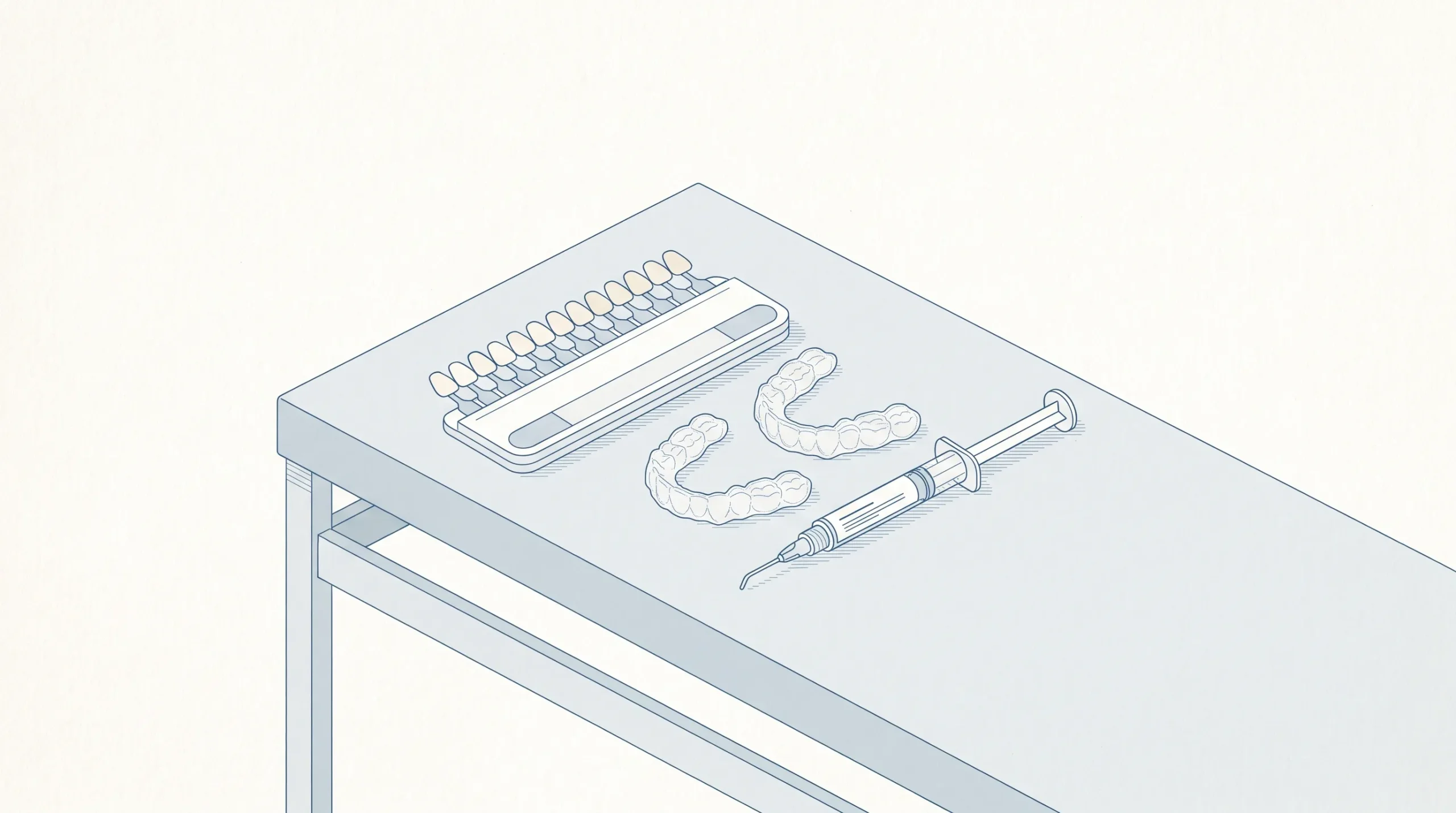
Benefits and limitations of each option
In-chair whitening may be convenient for people who want treatment completed in a dental setting. It may produce a visible shade change after one appointment, although the amount of change varies. Some patients also like that the dental team manages gel application and tissue protection.
The limitations are just as important. In-chair whitening can still cause sensitivity. It may not suit people with untreated dental disease, severe sensitivity, certain enamel conditions or unrealistic expectations about how white teeth should become. It may also need maintenance over time because teeth can stain again.
Take-home whitening may suit people who prefer gradual treatment. It can be easier to pause if sensitivity develops and may be useful for maintenance when custom trays are provided, if your dentist considers this appropriate. The trade-off is that it relies on consistent use and careful instructions.
| Option | Possible advantages | Possible limitations |
|---|---|---|
| In-chair whitening | Shorter treatment time, professional application, soft tissue protection during the appointment | Sensitivity can occur, results vary, may not change restorations or deeper discolouration |
| Dentist-provided take-home trays | Gradual whitening, custom tray fit, potential for planned maintenance if suitable | Requires daily use, gel must be used correctly, sensitivity or gum irritation can still occur |
| Over-the-counter whitening | Convenient and widely available | Fit and effectiveness vary, not individually assessed, may not address the cause of discolouration |
Neither approach is automatically better for everyone. A person with mild surface staining and healthy teeth may have different needs from someone with old fillings, gum recession or a single dark tooth.
Sensitivity, gums and other possible risks
All dental procedures carry potential risks and benefits. Whitening is commonly provided, but it should still be approached thoughtfully.
Possible side effects and limitations include tooth sensitivity, gum irritation, uneven whitening, temporary white patches, discomfort if gel contacts soft tissues and disappointment if staining does not respond as expected. If existing fillings, crowns or veneers are visible, they may need separate assessment because they will not lighten with whitening gel.
People with gum recession may also be more prone to sensitivity because exposed root surfaces do not respond in the same way as enamel. Whitening may not be recommended during certain stages of dental treatment, or if there are untreated oral health concerns.
If you experience strong sensitivity, burning gums, mouth ulcers or pain after using a whitening product, stop using it and speak with a dentist. Prompt advice is also sensible if one tooth is darker than the others, especially after trauma, because this may need a different type of assessment.
How to choose between in-chair and take-home whitening
A useful way to decide is to look at your priorities and your dental condition rather than starting with the product.
You may wish to ask your dentist:
- Is my staining likely to respond to whitening?
- Are my teeth and gums suitable for whitening at the moment?
- Do I have fillings, crowns or veneers that may affect the final shade?
- Am I more suited to in-chair whitening, take-home whitening or another option?
- What sensitivity should I expect and how should I manage it?
- How long should I wait after whitening before considering other cosmetic dental work?
Your habits also play a role. Coffee, tea, red wine, some sauces and smoking can contribute to staining over time. Whitening does not stop future staining, so maintenance and daily oral care are part of the picture. Bright Smiles has a simple guide to common tooth staining substances if you want to understand everyday causes of discolouration.
Cost may also influence the decision. Fees can vary depending on the whitening option, the materials used and whether other dental care is needed first. Rather than choosing based on price alone, it is worth asking what is included, whether review advice is provided and what limitations apply to your teeth.
What to expect after whitening
After whitening, teeth can be more prone to sensitivity for a short period. Your dentist may recommend avoiding very hot or cold foods and drinks if your teeth feel sensitive. They may also provide guidance on toothpaste, brushing and when to resume normal habits.
Some people notice that the shade settles in the days after whitening. This is normal, and it is one reason shade matching for restorations is not usually rushed immediately after whitening. If you are planning a filling, crown, veneer or bonding on a visible tooth, your dentist can advise on timing.
Longer-term results vary. Diet, oral hygiene, smoking, enamel characteristics and how often you have professional cleans can all influence how teeth look over time. Whitening maintenance should be discussed with your dentist so it is not overused.
Frequently Asked Questions
Is in-chair whitening stronger than take-home whitening? In-chair whitening often uses a higher-strength gel under professional supervision. Take-home whitening usually uses a lower-strength gel over a longer period. Strength alone does not determine suitability, and a dental assessment is recommended.
Does teeth whitening damage enamel? Whitening products used appropriately are designed for teeth, but incorrect or excessive use may increase sensitivity, gum irritation or other problems. Your dentist can advise whether whitening is suitable for your teeth and how to use it safely for your circumstances.
Will whitening work on crowns, veneers or fillings? No. Whitening gels lighten natural tooth structure, not porcelain, ceramic, composite resin or denture materials. If you have visible restorations, your dentist can discuss how they may look after whitening.
Is take-home whitening slower than in-chair whitening? Usually, yes. Take-home whitening is generally more gradual because it is used over several days or weeks. Some people prefer this pace because it allows them to monitor sensitivity and stop or pause if advised.
Can I whiten my teeth if they are sensitive? Possibly, but it depends on the cause and severity of the sensitivity. Your dentist may recommend treating sensitivity, decay, gum recession or cracks before considering whitening. Some people may not be suitable candidates.
How white will my teeth get? Results vary between patients. The outcome depends on your starting shade, the cause of discolouration, enamel characteristics, previous dental work and the whitening option used. Whitening should aim for a result that is appropriate for your teeth rather than an extreme shade.
Discuss whitening options with Bright Smiles
If you are considering in-chair whitening or take-home whitening, a dental examination can help determine whether whitening may be suitable and which approach fits your needs.
Bright Smiles sees patients at both the Brightwater and Currimundi locations on the Sunshine Coast. To discuss your concerns, you can book an appointment with the team and ask about the potential benefits, risks, alternatives and expected limitations for your individual situation.