

Professional dental treatment for teeth whitening usually starts with an oral health assessment, followed by a discussion about whether whitening is suitable and how it would be carried out. Treatment may involve whitening gel applied at the dental practice or dentist-supervised trays used at home. It does not usually mean arriving for an appointment and immediately having your teeth whitened.
For patients considering whitening on the Sunshine Coast, understanding the appointment process can make it easier to ask questions and decide whether to proceed. Whitening is optional, and keeping your natural tooth colour is also a reasonable choice.
Before whitening: an oral health assessment
Your dentist first checks your teeth and gums and asks what you would like to change. They may ask about previous whitening, sensitivity, dental work, medicines and relevant medical history.
The examination helps identify decay, gum inflammation, exposed tooth surfaces or other concerns that may need attention before bleaching products are used. X-rays are not automatically required for whitening, but your dentist may recommend them if there is a clinical reason.
If you are unfamiliar with this part of an appointment, understanding what general dental treatment may include can help explain why an examination comes before cosmetic treatment.
An assessment for dental treatment for teeth whitening should also cover whether the colour change you want is achievable with bleaching. Different types of discolouration respond differently, and natural tooth shades vary.
Tell your dentist if you are pregnant or breastfeeding. Elective whitening is generally deferred in these circumstances. Younger patients also need careful assessment rather than assuming a whitening product is appropriate.
Planning around stains, fillings and crowns
A scale and polish can remove some surface staining and deposits, but it is different from bleaching. Whitening gels commonly contain hydrogen peroxide or carbamide peroxide, which act on coloured compounds within natural teeth.
Your dentist can explain whether cleaning alone may address your concern or whether bleaching could be considered. Cleaning is not an automatic requirement for every whitening patient.
Fillings, crowns and veneers do not whiten in the same way as natural teeth. If these are visible when you smile, bleaching the surrounding teeth may create a colour mismatch.
Existing dental work does not necessarily rule out whitening, but it should be included in the plan. Replacing a healthy restoration simply to match a new shade is a separate decision with its own costs and risks, not an automatic next step. A discussion about which cosmetic dental treatment may suit your needs can help put the options in context.
What dental treatment for teeth whitening may involve in the chair
If in-chair whitening is appropriate, your dentist should explain the procedure, likely limitations, fees and possible side effects before obtaining your consent.
The plan for dental treatment for teeth whitening should describe the method being recommended and why it may suit your circumstances. The following is a general outline, not confirmation of a particular system available at Bright Smiles.
During an in-chair appointment, the dental professional generally protects the gums and other soft tissues, then applies whitening gel to the teeth being treated. Depending on the product, the gel may be removed and reapplied during the appointment.
Some systems use a light as part of their protocol. Whether a light is used does not, by itself, tell you how much colour change to expect.
You may be asked about sensitivity during treatment. Let the clinician know if you experience discomfort rather than trying to tolerate it. The treatment can be adjusted or stopped when necessary.
Appointment length, the number of applications and whether further treatment is appropriate depend on the product and your individual response. A particular shade cannot be promised.
What dentist-supervised take-home whitening may involve
Take-home whitening is still planned and supervised by a dentist, even though you apply the gel yourself. An appointment may involve taking impressions or digital scans to prepare fitted trays, depending on the system selected.
When dental treatment for teeth whitening uses take-home trays, the instructions matter as much as the product. Your dentist should explain how much gel to use, how long to wear the trays and when to stop or arrange a review.
You should also be shown how to insert and remove the trays and clean them after use. Ask for written instructions if that would make the routine easier to follow.
Do not increase the amount of gel or wear the trays longer in an attempt to speed up the process. Extra exposure can increase irritation and sensitivity without providing a predictable additional benefit.
If gel spills onto your gums, a tray rubs or the instructions are unclear, contact the dental team before continuing. Do not combine the prescribed treatment with other whitening products unless your dentist has advised you to do so.
The Australian Dental Association’s guidance on teeth whitening provides further patient information about dental assessment and supervised treatment.
Sensitivity, irritation and when to pause
The main side effects discussed before whitening are tooth sensitivity and irritation of the gums or other soft tissues. Sensitivity may feel like a brief response to cold air, drinks or foods, although experiences vary.
If dental treatment for teeth whitening causes discomfort, pause home applications and ask your dentist what to do next. Depending on the cause, they may recommend a break, a change to the routine or a suitable sensitivity product.
Persistent pain, pain focused on one tooth, gum injury or swelling needs dental assessment rather than assuming it is an expected whitening effect. Whitening should not be used to cover up an unexplained dental concern.
There is also a risk of an uneven result or less colour change than expected. These limitations should be discussed before treatment, particularly when there are visible restorations or darker areas within individual teeth.
Dental procedures carry potential risks and benefits. Professional assessment and clear instructions help manage those risks, but they do not make whitening risk-free.
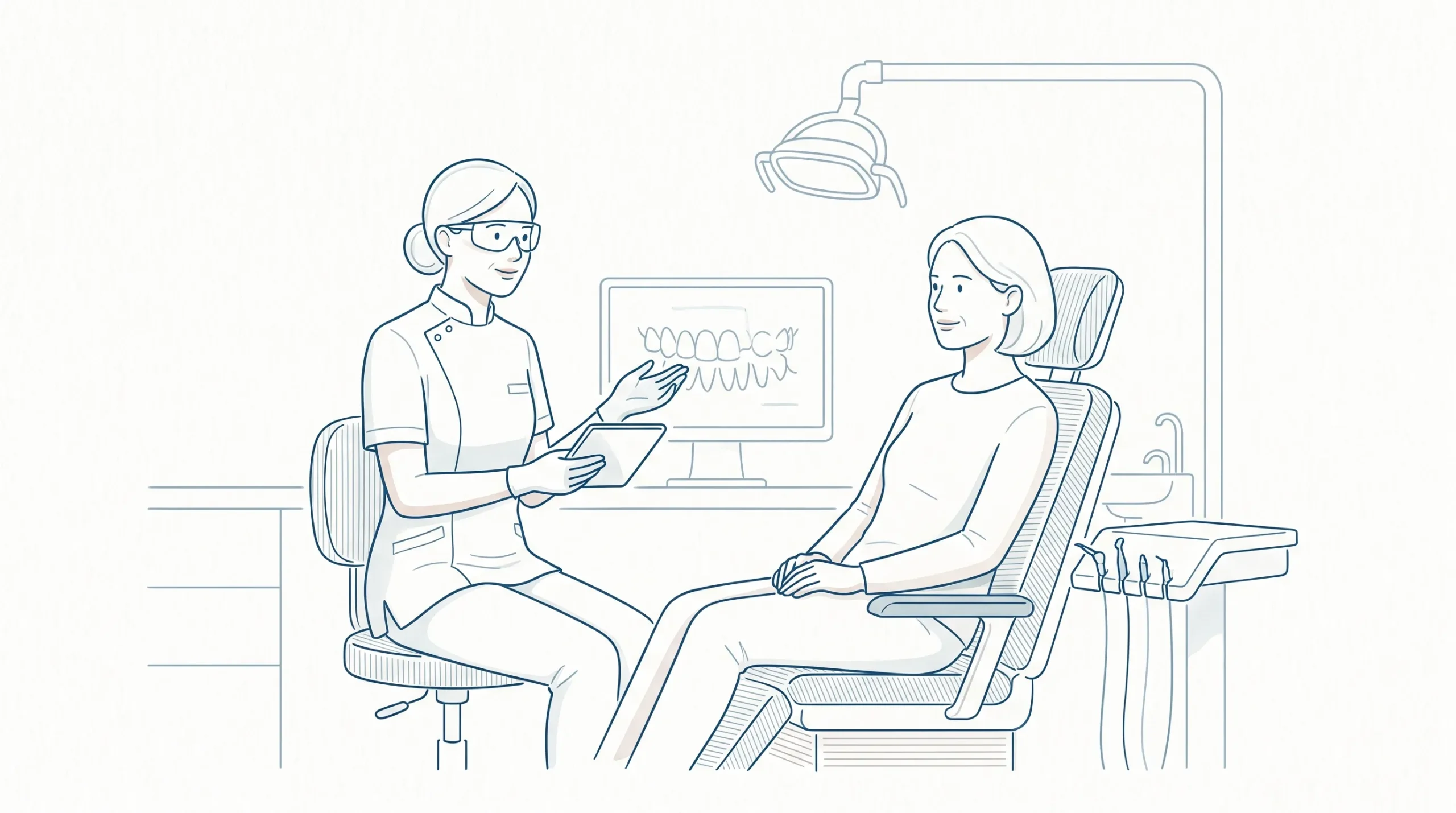
Aftercare and reviewing the result
Follow the instructions for the particular whitening product used. Advice about eating, drinking, brushing and when to resume applications can differ between systems, so avoid relying on a generic online routine.
Continue brushing twice daily with fluoride toothpaste and cleaning between your teeth. Whitening does not replace preventive dental care, and bleach does not remove plaque or treat decay.
After dental treatment for teeth whitening, a review may be useful to assess sensitivity, gum health and the colour response once it has settled. The immediate appearance may not be the final shade because temporary dehydration can affect how teeth look.
Colour can change again over time. Smoking, staining foods and drinks and the natural ageing of teeth can affect how long a change remains noticeable. There is no single maintenance schedule suitable for everyone.
Ask your dentist before starting a top-up course. Repeated whitening is not automatically necessary, particularly if you are comfortable with the current colour or have ongoing sensitivity.
Questions to ask before agreeing to treatment
A useful consultation should leave you clear about the proposed process and its limits. You can bring details of any whitening products you have already used, including their names and how often you applied them.
Before agreeing to dental treatment for teeth whitening, consider asking these questions:
- Is the discolouration likely to respond to bleaching, or could cleaning alone help?
- How might my fillings, crowns or veneers affect the result?
- What should I do if I develop sensitivity or gum irritation?
- What does the quoted fee include, and could additional appointments be needed?
- When should the result be reviewed, and how would maintenance be decided?
Ask whether the quote includes assessment, trays if applicable, gel and follow-up. Any dental care needed before whitening should be explained and quoted separately where relevant.
Private health insurance often excludes cosmetic whitening, although policy terms vary. Before assuming there is a rebate, check whether dental insurance covers teeth whitening and confirm your own cover with your insurer.
You do not need to make a decision during the consultation. It is reasonable to take time to consider the costs, possible benefits and alternatives.
Frequently asked questions
Can whitening be done at my first appointment? Sometimes, but an assessment is needed first. Treatment may be postponed if there are oral health concerns, if fitted trays need to be prepared or if you would like more time to consider the options. Ask what the appointment is intended to include when booking.
Will whitening work on one dark tooth? A single dark tooth should be assessed before whitening. Its colour may relate to a previous injury, dental treatment or another issue. It may need a different approach from general whitening, and the underlying cause should be investigated first.
How many appointments will I need? The number depends on your oral health, the method selected and how your teeth respond. Your dentist can outline a proposed schedule, but additional treatment should be based on reassessment rather than a promise of reaching a particular shade.
Is whitening necessary for healthy teeth? No. Healthy teeth naturally come in different shades, and dental treatment for teeth whitening is a cosmetic choice rather than a requirement for oral health. Choosing not to whiten does not mean neglecting your teeth.
Can I whiten if I already have sensitive teeth? Existing sensitivity does not always rule out treatment, but its cause should be assessed first. Your dentist can explain whether whitening may be appropriate, whether the routine needs adjusting or whether it is better to defer treatment.
Discuss your options with Bright Smiles
If you are considering whitening, an examination can help establish whether it may suit your teeth and gums and what the process would involve. Bright Smiles sees patients at both its Brightwater and Currimundi locations on the Sunshine Coast.
To discuss your concerns, you can book an appointment with the team at Bright Smiles at either location. Your dentist can explain the potential benefits, risks and alternatives before you decide whether to proceed.